RSF kills dozens, mostly children, in war-torn Sudan’s Kalogi: SAF sources
 05 December 2025
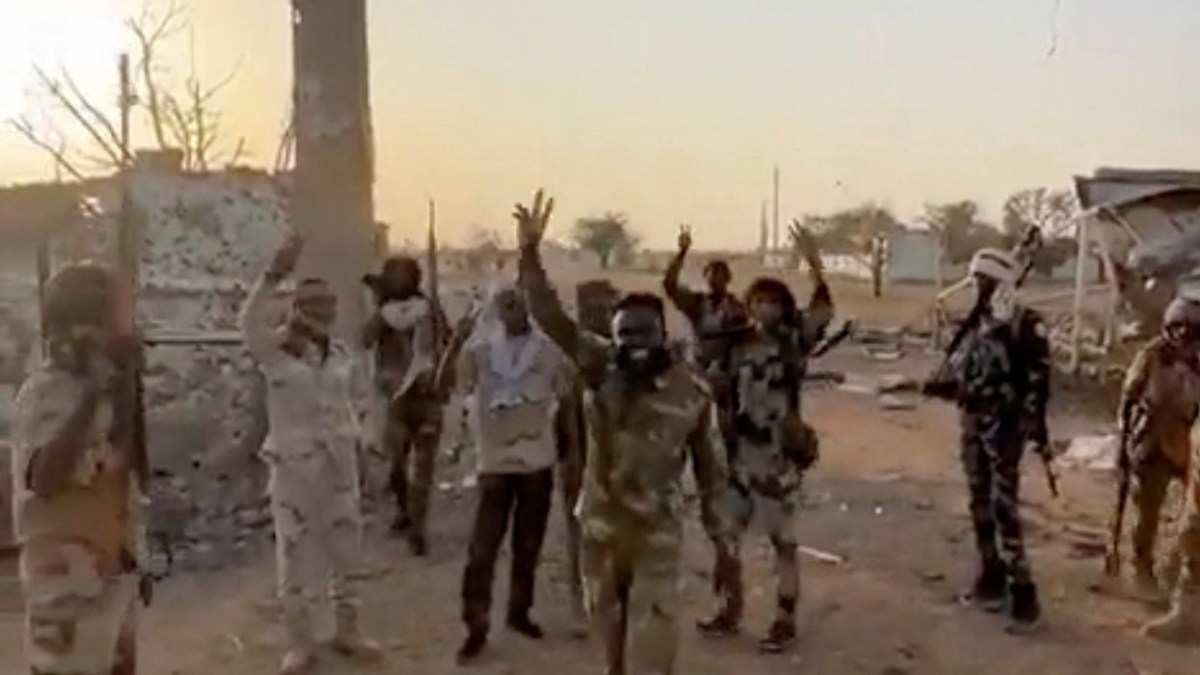

The death toll from Rapid Support Forces (RSF) attacks on a kindergarten and other sites in the city of Kalogi in South Kordofan state has risen to about 47 people – mostly children – with about 50 others injured, two military sources in the government-aligned Sudanese Armed Forces (SAF) have told Al Jazeera.
According to the sources, the RSF attacked the kindergarten on Thursday and then returned to target civilians who had gathered to offer assistance amid the carnage. The city’s hospital and a government building were also bombed.
- list 1 of 3UN warns Sudan’s Kordofan faces mass atrocities as fighting spreads
- list 2 of 3Rubio says Trump to get involved in Sudan peace efforts as civil war rages
- list 3 of 3Amnesty calls for war crimes probe on RSF attack on Sudan refugee camp
end of list
The sources indicated that this toll is not yet final, due to the serious injuries sustained by some of those who were treated.
On Thursday, the Sudan Doctors Network initially reported that at least nine people were killed, including four children and two women, in “deliberate suicide-drone attacks carried out in Kalogi town” carried out by the RSF and its ally, the Sudan People’s Liberation Movement–North (al-Hilou), on the kindergarten and several civilian facilities.
“This attack constitutes a grave violation of international humanitarian law and is a continuation of the targeting of civilians and vital infrastructure,” they added.
It’s the latest instance of RSF atrocities against civilians in the ongoing brutal civil war, now deep into its third year, pitting the SAF against the paramilitary RSF. The SAF has also been accused of committing atrocities in the war.
On Thursday, the United Nations warned that the Kordofan region of Sudan could face another wave of mass atrocities as fierce fighting between rival armed forces threatens a humanitarian catastrophe.
Advertisement
UN human rights chief Volker Turk said that history was “repeating itself” in Kordofan following last month’s fall of el-Fasher, the capital of Sudan’s North Darfur state, where warnings of impending violence were largely ignored by the international community before widespread killings occurred.
“It is truly shocking to see history repeating itself in Kordofan so soon after the horrific events in el-Fasher,” Turk said, urging global powers to prevent the region from suffering a similar fate.
Since late October, when the paramilitary RSF captured Bara, in North Kordofan state, the UN has documented at least 269 civilian deaths from aerial bombardment, artillery fire and summary killings.
Communication blackouts across the region mean the actual toll is possibly far higher, with reports emerging of revenge attacks, arbitrary detentions, sexual violence and the forced recruitment of children.
The RSF claimed control of the West Kordofan city of Babnusa earlier this week, with footage showing its fighters moving through the military base there. The army denied that the city had fallen.
Following the fall of el-Fasher, the last major Darfur city under the army and its allies’ control, attention has shifted to Kordofan in central Sudan.
Kordofan’s strategic importance makes it a key territory for both sides. The region sits between RSF-controlled Darfur in the west and government-held territory in the east and north, serving as a vital corridor that links the warring factions’ heartlands.
Control of major cities like el-Obeid would give the RSF a direct route towards the capital Khartoum, which government forces recaptured earlier this year.
Before el-Fasher fell in November, the UN issued urgent warnings about potential atrocities. Those alerts went largely unheeded.
After the city’s capture, mass killings ensued, with corpses visible from satellite imagery, prompting UN chief Antonio Guterres to describe it as a “crime scene”.
Amnesty International has since called for war crimes investigations, and the European Union has placed sanctions on Abdelrahim Dagalo, the RSF’s deputy and brother of the group’s chief, Mohamed Hamdan “Hemedti” Dagalo.