

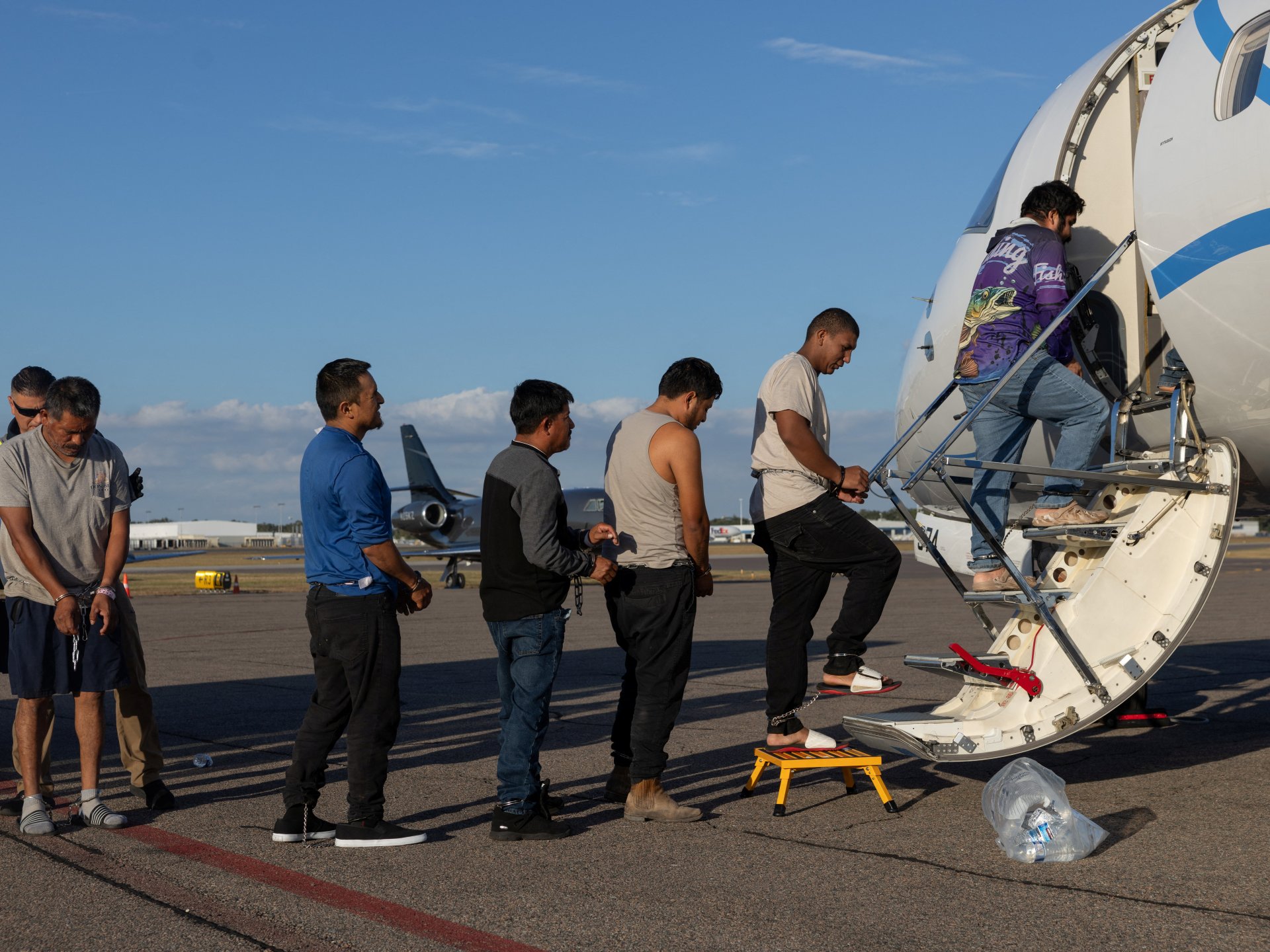

The State Department in the United States says it has revoked more than 100,000 visas since President Donald Trump returned to office last year, as his administration continues with a hardline crackdown on immigration.
The visa purge includes 8,000 students and 2,500 specialised workers, according to a social media post from the State Department on Monday.
- list 1 of 3US social media rules for tourists could have ‘chilling effect’ on travel
- list 2 of 3Trump government suspends visa lottery linked to Brown University suspect
- list 3 of 3Trump administration says still considering military strikes on Iran
end of list
It added that the majority saw their visas withdrawn due to “encounters with US law enforcement for criminal activity”, though it was not clear whether those encounters resulted in charges.
The volume of the revocations reflects the broad nature of the crackdown Trump initiated when he returned to the White House last year. The administration has claimed to have overseen more than 2.5 million voluntary departures and deportations, a “record-breaking achievement”, it said last month.
Some of those deportations, however, have included immigrants who held valid visas, raising questions about due process and human rights.
The administration has also adopted a stricter policy for granting visas, with tightened social media vetting and expanded screening.
“We will continue to deport these thugs to keep America safe,” the State Department said in its post on X.
The four leading causes for visa revocations were overstays, driving under the influence, assault and theft, State Department deputy spokesperson Tommy Pigott said. The revocations marked a 150 percent increase from 2024, he added.
The State Department has also launched a Continuous Vetting Center, aimed at ensuring “all foreign nationals on American soil comply with our laws – and that the visas of those who pose a threat to American citizens are swiftly revoked”, Pigott said.
Advertisement
That centre is part of an overall push to restrict who is allowed into the country. The State Department has ordered US diplomats in general to be vigilant against visa applicants whom Washington may see as hostile to the US or who have a history of political activism.
In November, the State Department said it had revoked about 80,000 non-immigrant visas since Trump’s inauguration, for offences ranging from driving under the influence to assault and theft.
Trump had campaigned for re-election in 2024 on a pledge to oversee the “largest deportation programme of criminals in the history of America”. He was sworn in for a second term on January 20, 2025.
But critics have argued that Trump’s wide-sweeping approach has targeted criminals and non-criminals alike. The Trump administration has also faced scrutiny for appearing to target visa-holders who hold views it disagrees with.
In March, for instance, the Trump administration began a campaign of stripping student protesters involved in pro-Palestinian activism of their visas. One student, Rumeysa Ozturk of Tufts University, appears to have been targeted for writing an editorial in her campus newspaper.
In October, the State Department also announced it had removed visas from six foreign nationals who “celebrated” the assassination of conservative activist Charlie Kirk online.
“The United States has no obligation to host foreigners who wish death on Americans,” the State Department wrote in a social media statement.
Those instances, however, have raised concern about the government violating the First Amendment right to free speech.
There has also been widespread anger in the US about the use of force in the Trump administration’s immigration crackdown.
Renee Nicole Good, a 37-year-old mother of three, was recently shot dead in her car in Minneapolis, Minnesota, during a period of heightened immigration enforcement in the state, sparking protests across the country.
Related News
Fourth Palestinian baby freezes to death in Gaza since November
Venezuelans reflect on Maduro’s removal, grappling with hope and fear

Ten found guilty of gender cyberbullying France First Lady Brigitte Macron
