Trump wants to invade Iran to seize oil, calls US objectors ‘stupid people’
 30 March 2026
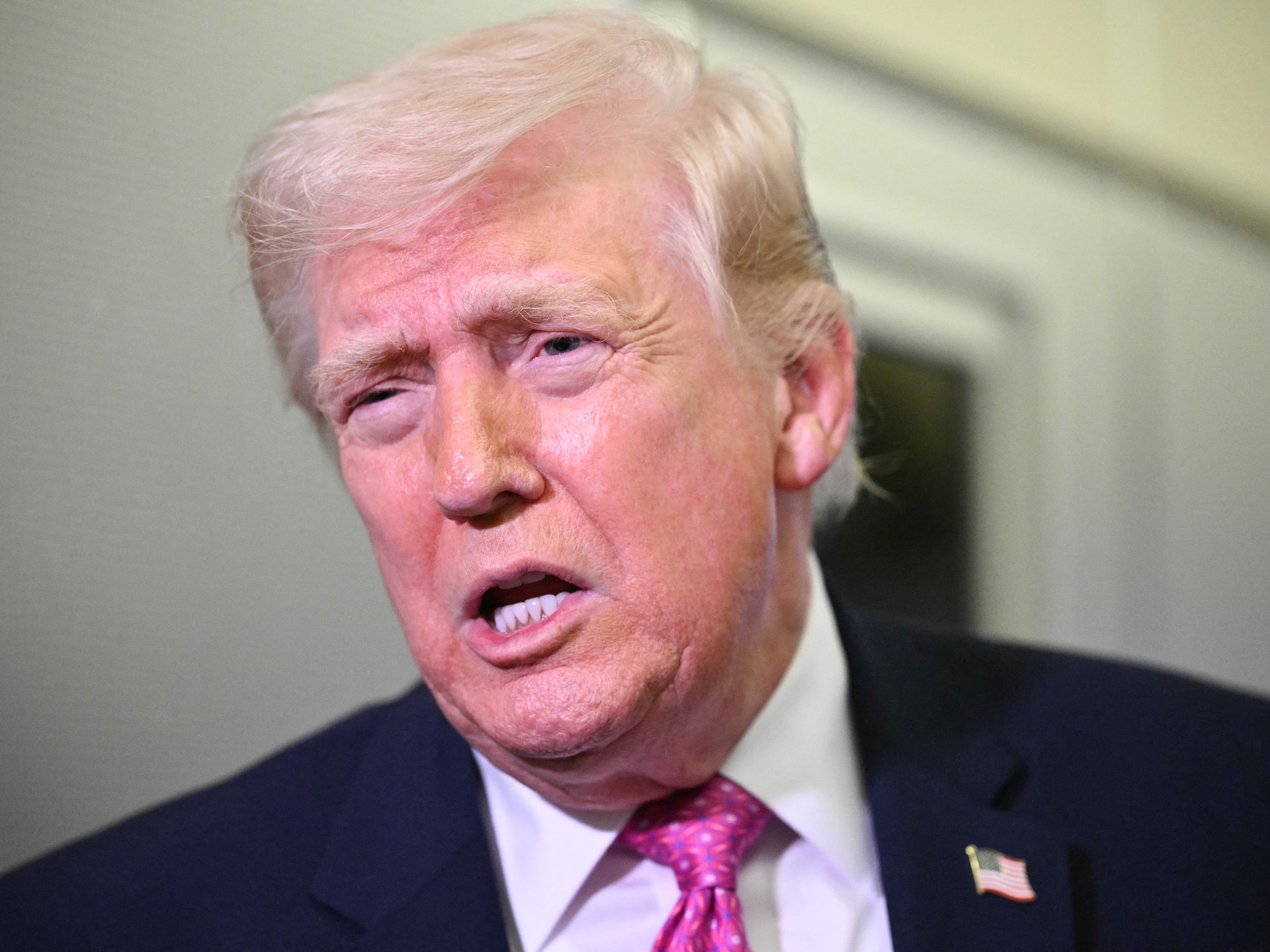

United States President Donald Trump has said he wants to “take the oil in Iran” by seizing its export hub of Kharg Island, a plan being opposed in the US by “some stupid people”.
In an interview with the Financial Times newspaper, published on Sunday, Trump said his plans for Iran differed from those for Venezuela, where Washington intends to control the oil industry “indefinitely” following the abduction of its leader, Nicolas Maduro, in January.
- list 1 of 3How will the Houthis’ involvement shape the war?
- list 2 of 3Iranian attack damages Kuwait power and desalination plant, kills worker
- list 3 of 3Oil tops $116 a barrel as Iran accuses US of preparing invasion
end of list
“To be honest with you, my favourite thing is to take the oil in Iran, but some stupid people back in the US say: ‘Why are you doing that?’ But they’re stupid people,” Trump told the British newspaper.
“Maybe we take Kharg Island, maybe we don’t. We have a lot of options,” he added. “It would also mean we had to be there [on Kharg Island] for a while.”
The Trump administration has deployed US Marines to the Middle East as the US-Israel war on Iran stretches into its fifth week, and has also been planning to send thousands of soldiers from the army’s 82nd Airborne to the region.
On Saturday, the US Central Command (CENTCOM) said about 3,500 additional soldiers arrived in the Middle East on board the USS Tripoli.
US officials, speaking to The Washington Post newspaper, said discussions within the administration over the past month have touched upon the possible seizure of Kharg Island, a key Iranian oil export hub in the Gulf that is the undisputed economic backbone of Iran.
According to the Iranian Ministry of Petroleum, the island’s facilities act as the vital nerve centre for the energy sector.
Advertisement
The terminal receives crude from three major offshore oilfields – Aboozar, Forouzan and Dorood – which is then transported via a complex network of subsea pipelines to onshore processing facilities before being stored or shipped to global markets.
Iran’s parliament speaker, Mohammad Bagher Ghalibaf, said on Wednesday that any such attempt would be met with targeted attacks on the “vital infrastructure” of a regional country, which he did not name, that assists in the operation.
On Sunday, Ghalibaf threatened US troops if they were to invade Iran.
“Our men are waiting for the arrival of the American soldiers on the ground to set them on fire and punish their regional allies once and for all,” he said in a statement carried by the official IRNA news agency.
Top diplomats of Pakistan, Saudi Arabia, Egypt and Turkiye have gathered in Pakistan’s capital Islamabad in a bid to prepare ground for de-escalation in the war on Iran that is upending the global economy.
Oil prices have surged to their highest level in nearly two weeks, with Brent crude, the global benchmark, rising more than 3 percent on Monday morning to top $116 a barrel.
Iran’s Ministry of Health reported that 2,076 people had been killed since the start of the war, including 216 children. At least 25 people have been killed in the Gulf Cooperation Council (GCC) member states.
The regional efforts come as Trump presented a 15-point peace plan that critics described as “maximalist”. Tehran has rejected it and instead presented its own conditions, including the end of US-Israeli attacks, reparations for war damage and security guarantees to prevent future attacks.
Trump told the Financial Times that Iran had agreed to allow 20 ships carrying oil through the Strait of Hormuz, the waterway through which a fifth of the world’s oil usually flows, starting on Monday morning and continuing over the next few days, “out of a sign of respect”.
When asked whether a ceasefire deal could be reached in the coming days that would reopen the strait, Trump replied: “We’ve got about 3,000 targets left – we’ve bombed 13,000 targets – and another couple of thousand targets to go. A deal could be made fairly quickly.”
“I would only say that we’re doing extremely well in that negotiation, but you never know with Iran because we negotiate with them and then we always have to blow them up,” he added.
Trump also repeated claims that Iran’s new Supreme Leader Mojtaba Khamenei was injured in the war. “The son is either dead or in extremely bad shape,” Trump said, referring to Mojtaba, the son of former Supreme Leader Ayatollah Ali Khamenei, who was killed on the first day of the war on February 28.
Advertisement
“We’ve not heard from him at all. He’s gone,” he added.
Tehran has insisted the head of state is safe and well after his absence from the public eye led to speculation on his wellbeing.
Related News
US East Asian allies in legal quandary as Trump seeks help in the Middle East
Former FBI chief, Robert Mueller, dead at 81
UN experts urge Israel to free Gaza doctor amid reports of ‘severe torture’