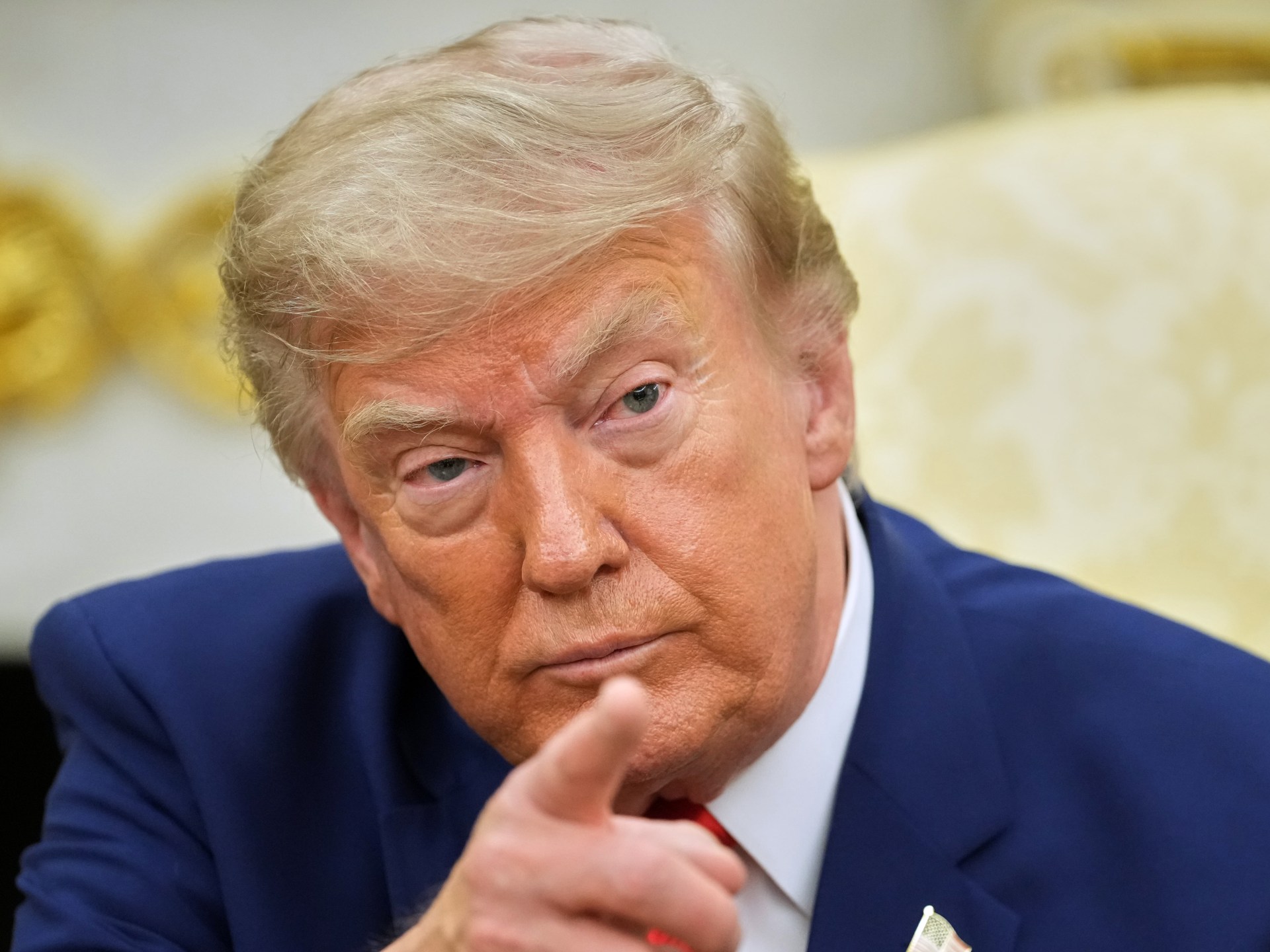

The United States has announced the release of $600m for Gavi, as it cut off the World Health Organization (WHO) from the global vaccine alliance, in a major financial blow to the United Nations group.
In a joint statement, the US Department of State and the Department of Health and Human Services said: “The United States also reaffirms that it will not provide US Government funding to the World Health Organization through Gavi.”
The development, said the statement, is in line with US President Donald Trump’s instructions to “Health and Human Services Secretary Robert Kennedy Jr and Secretary of State Marco Rubio, to negotiate reforms with Gavi as a condition for renewed US support”.
US Republican Senator Susan Collins, who had pushed for the reinstatement of US funding for the global programme which expands access to immunisations around the world, welcomed the decision.
According to the State Department, Gavi agreed to work towards replacing mercury-containing vaccines with mercury-free alternatives, in partnership with its board and partner countries.
The Trump administration’s latest move against the WHO comes after historical animosity.
In 2020, Trump instructed his administration to temporarily halt funding to the WHO over its handling of the coronavirus pandemic, claiming the WHO promoted China’s “disinformation” about the virus, likely leading to a wider outbreak.
At the time, the US was the biggest donor to the WHO, contributing more than $400m in 2019, roughly 15 percent of its budget.
Advertisement
In January 2021, then-US President Joe Biden reversed Trump’s decisions, restoring US funding and halting the withdrawal process from the WHO.
However, on the first day of his second term, January 20, 2025, Trump said the US would withdraw from the WHO and suspended US contributions.
Experts have said the orders appear to be about ideological rather than strategic positioning.
The WHO is funded by a combination of core operating funds that each member state pays, and voluntary contributions from various partners.
At about $3.4bn, the WHO’s budget is roughly a third of that of the Centers for Disease Control and Prevention (CDC), which got $9.3bn in core funding in 2023.
The WHO funds support programmes to prevent and treat polio, tuberculosis, HIV, malaria, measles and other diseases, especially in countries that struggle to provide healthcare domestically.
It also responds to health emergencies in conflict zones, including parts of Gaza, Sudan, the Democratic Republic of the Congo, and others.
Related News
Ukraine ‘cuts off’ Crimea from Russia, plunging it into an energy crisis
At least 28 people killed as fire engulfs shoe factory in China
UN chief fears for ‘millions’ of Palestinians amid UNRWA funding shortfall