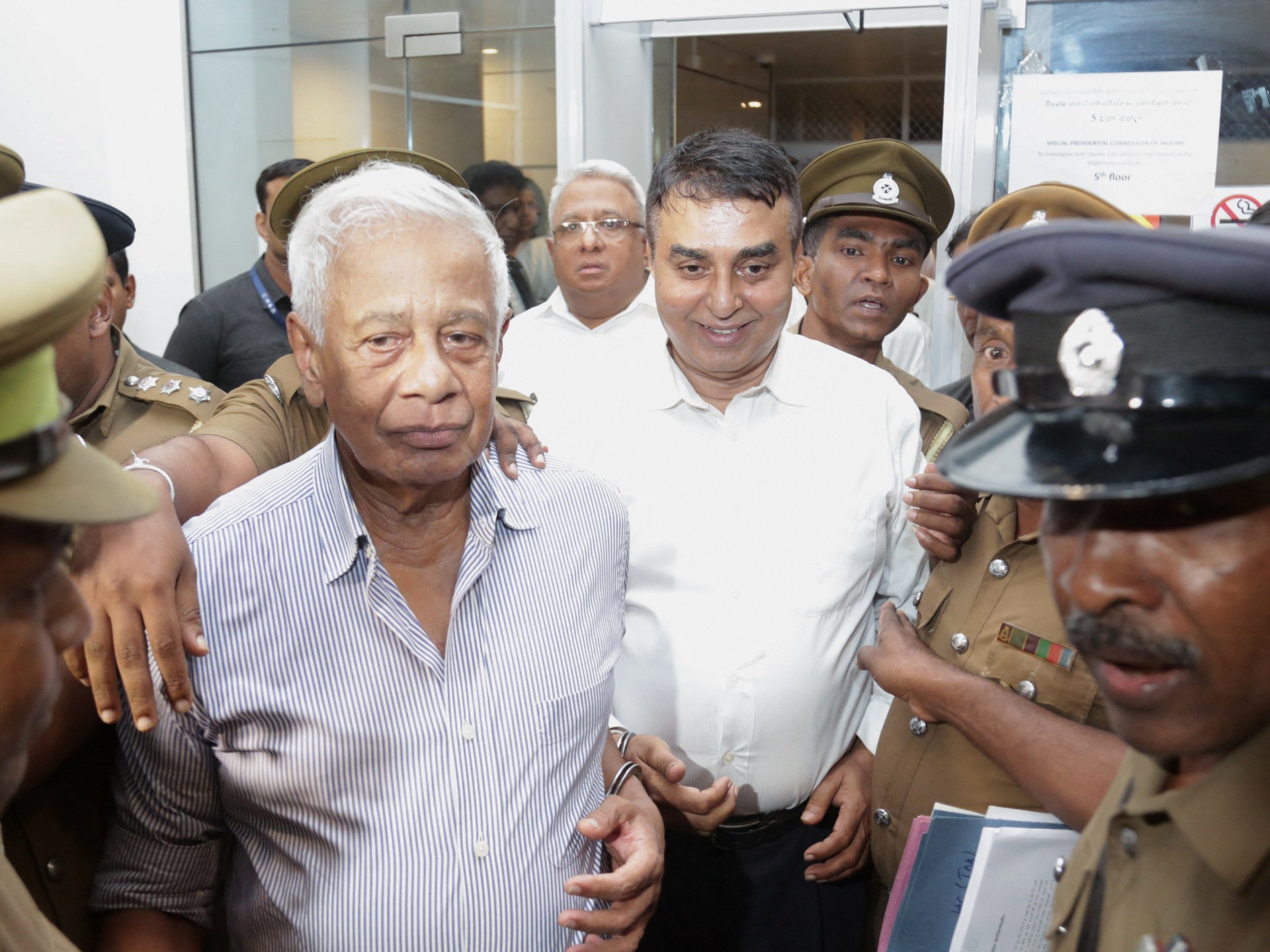

A Sri Lankan court has sentenced a former police chief and a former Defence Ministry official to death after finding them guilty of criminal negligence for the Easter Sunday bombings that killed 260 people in 2019.
Former Police Chief Pujith Jayasundara and former Defence Ministry Secretary Hemasiri Fernando were convicted and sentenced in a 2-1 decision on Friday by the three-member High Court bench.
- list 1 of 2Sri Lanka’s former intelligence chief arrested over 2019 Easter attacks
- list 2 of 2Sri Lanka sentences two officials to death for not stopping Easter bombings
end of list
The judgements at the special fast-track court came after the state appealed against a 2022 decision that acquitted the duo.
The coordinated bombings in 2019 were carried out at three tourist hotels and three churches – two of them Catholic and one Protestant. A parliamentary committee found that police and intelligence officials failed to act on repeated intelligence warnings of the attacks.
Chaminda Athukorale, lawyer for the two men, said on Saturday they will appeal the ruling within two weeks.
“The dissenting judgment explains why the two accused had no motive to kill and no links with the actual perpetrators of the bombings,” Athukorale told the AFP news agency.
The court was told during the proceedings that an Indian intelligence agency had alerted Sri Lanka on April 4, 2019 to a possible suicide attack, but authorities failed to take action.
Under a previous civil action, Fernando and Jayasundara were ordered to pay 125 million rupees ($372,464) in damages to survivors of the attacks.

Sri Lanka Easter bombings
Two Sri Lanka-based ISIL-inspired groups were accused of carrying out the Easter Sunday suicide bombings, and none of those believed to have been directly involved are living. Separate trials are taking place for people allegedly connected with the perpetrators.
Advertisement
The attacks killed 279 people, including 45 foreigners, and wounded more than 500 others.
Sri Lanka’s Catholic Church has claimed that those identified so far as perpetrators are not the masterminds behind the bombings, and that there was a bigger conspiracy behind the attacks.
A death penalty in Sri Lanka typically means life in prison because the country has had a moratorium on executions since 1976.
Current President Anura Kumara Dissanayake supports maintaining the moratorium.
There are at least 800 people on death row, according to government figures shared with parliament in February, with sentences usually commuted to life imprisonment.
Related News

Tehran slams Trump’s threat to use frozen Iranian assets as ‘incendiary’
Netanyahu’s Christian comments ‘aimed at sowing strife’: Lebanese analysts

Iran war live: US bombs Sirik, Qeshm, Bandar Abbas over Hormuz attacks