
The memorandum of understanding (MOU) signed between the United States and Iran has halted more than three months of direct warfare. The agreement, which includes lifting a US naval blockade and establishing a $300bn reconstruction fund for Iran, has fundamentally altered the geopolitical landscape.
According to a research paper by the Al Jazeera Centre for Studies (AJCS), the MOU represents a strategic setback for Washington’s initial war aims, effectively abandoning the goal of regime change. The framework also signals a potential end to Israeli ambitions of uncontested regional hegemony, with the US implicitly recognising Iran as a legitimate regional power.
- list 1 of 3UN warns Ebola could cost Africa $3.6bn and jobs
- list 2 of 3US envoys in Doha for indirect talks with Iranian technical delegation
- list 3 of 3Are US and Iranian negotiators meeting in Doha? What we know about talks
end of list
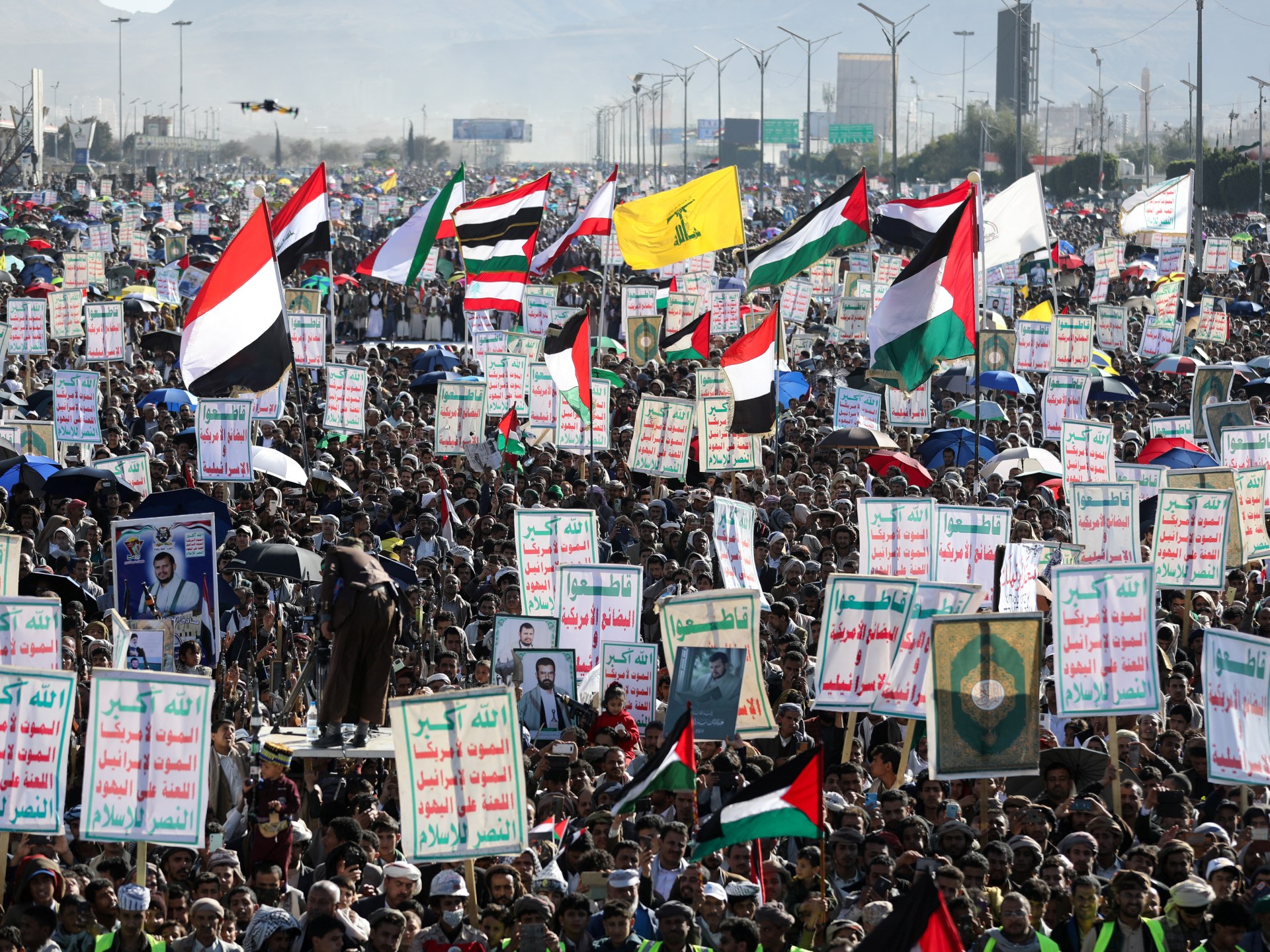
However, this prolonged conflict has imposed a severe stress test on Iran’s “axis of resistance” – the regional network of pro-Iranian allied forces, including the Lebanese group Hezbollah, Yemen’s Houthis, and armed groups in Iraq.
s the dust settles, Al Jazeera spoke to experts on Iran in an attempt to unpack the tactical losses, strategic adaptations, and future capabilities of Tehran’s proxy network to answer a critical question: Has Iran’s regional deterrence been permanently degraded, or is the axis mutating into a more decentralised, resilient force?
Tactical losses and homeland deterrence
For decades, Iran relied on its regional allies as part of its “forward defence” doctrine designed to keep conflicts away from its borders.
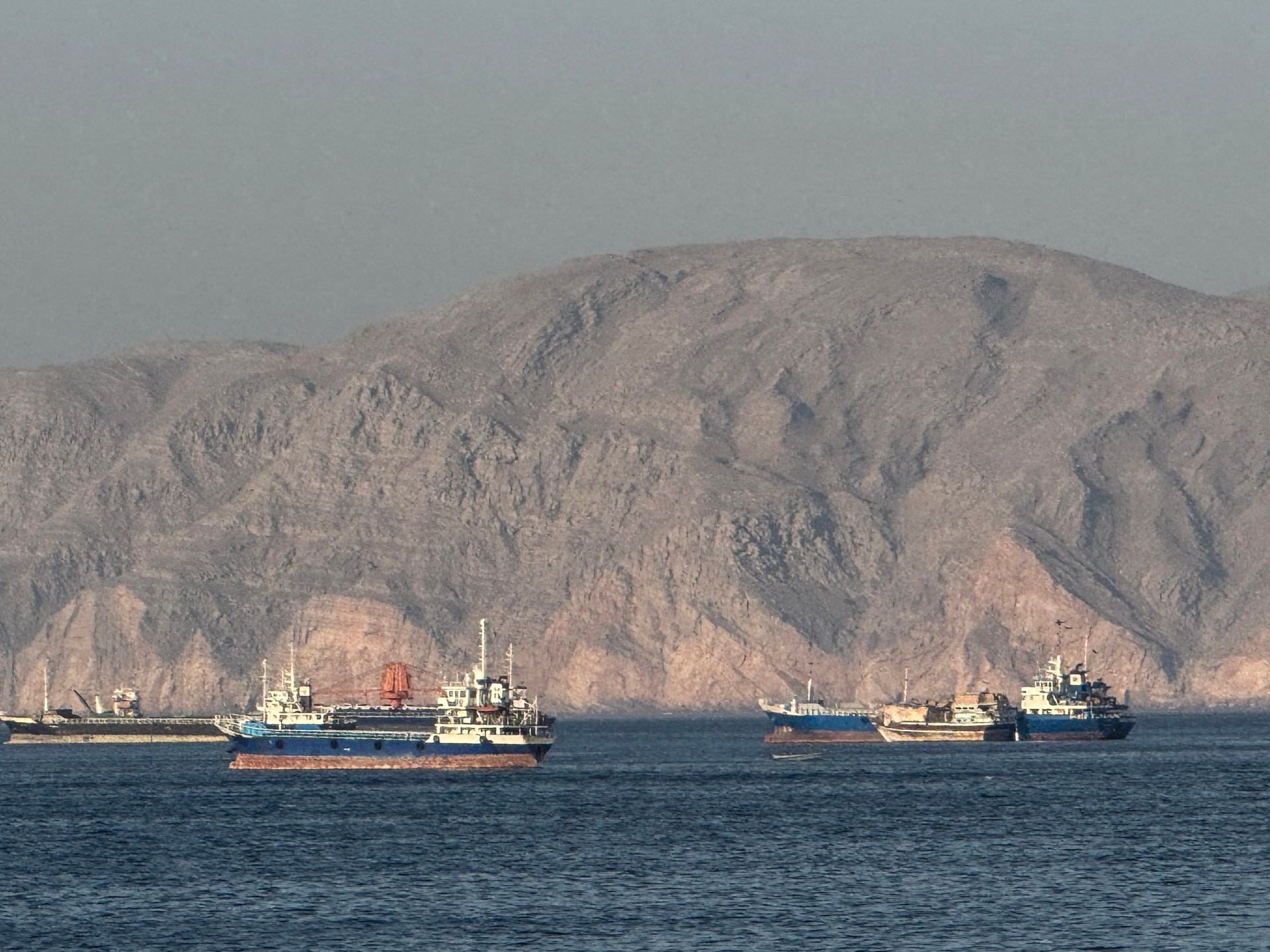
But interestingly, during the US-Israeli war – with Iran’s own territory, military infrastructure, and national security at stake – Tehran chose to largely rely on its own missiles, drones, and control over the Strait of Hormuz, rather than unleash the full force of its allies.
Advertisement
In fact, several of the members of the “axis of resistance”, notably the Houthis, acted cautiously when they could have opened up new fronts in the conflict.
That restraint is central to the debate over the axis’s future. Has Iran’s regional deterrence been permanently degraded, or is it evolving into a looser, more decentralised network that is harder to destroy?
Nader Hashemi, a professor of Middle East politics at Georgetown University, argues that the war has revealed a weakening of Iran’s regional doctrine.
“Right now, the Axis is at [the] weakest that it has ever been since its formation,” Hashemi stated. He noted that during the conflict, Iran’s own national security took precedence over Hezbollah, concluding that the overarching forward defence strategy was “significantly weakened”.
Proponents of that argument can point to the limited impact of the attacks conducted by Hezbollah and pro-Iran groups in Iraq, compared with Iran’s own arsenal of weapons. But that doesn’t necessarily mean that the doctrine has failed, said Negar Mortazavi, a senior fellow at the Center for International Policy.
Instead, Mortazavi believes that the doctrine has undergone a necessary strategic adaptation.
“It exposed its limits but also accelerated a shift toward homeland-based deterrence,” Mortazavi explained. While regional partners remained crucial for opening new fronts and creating strategic depth, she noted that Iran’s long-range missiles, inexpensive drones, and leverage over the Strait of Hormuz became the new centrepieces of its defence strategy.
That refocuses Iran’s deterrence. Previously, the forward defence doctrine meant that the threat that fronts could be ignited in Lebanon, Iraq, Yemen, and elsewhere kept Iran’s foes wary. But Israel’s willingness to unleash war on several fronts, highlighting the relative weakness of those forces and its own willingness to absorb the cost of those conflicts, weakened Iran’s deterrence. By showing that it also can absorb attacks and retaliate directly, in a more powerful way than its allied forces can, Iran has reestablished deterrence, in a different form.
For Ahmed al-Komi, a Palestinian journalist and researcher based in Tehran, that is not evidence of failure. He highlighted that the performance of the Axis, particularly Hezbollah’s ability to withstand massive blows, surprised many.
“It was the right decision [by Iran] at the beginning to stick with the allies,” al-Komi argued, noting that Tehran continues to view this network as an indispensable front line against US presence and Israeli operations.
Advertisement
The reconstruction dilemma
The next test will be reconstruction.
The MOU promises to unfreeze Iranian assets and establish an international reconstruction fund – and while there will likely be attempts at restricting what Iran can do with the money – questions mount over whether Tehran will focus on domestic recovery or funnel resources to rebuild the capabilities of its battered proxies.
Hashemi predicts that restoring the state will take absolute priority. “Priority will go to defence, rebuilding Iran’s drone and missile capacity, supporting the [Islamic Revolutionary Guard Corps] and reconstituting Iran’s alliances,” Hashemi explained. “Anything else will go to the citizens if there is anything left over,” leaving financial support for regional allies highly dependent on the fragile state of Iran’s economy.
Mortazavi views economic recovery and deterrence as complementary. She anticipates a dual-track strategy in which Tehran invests in domestic recovery to stabilise markets while also preserving its military deterrence. The military establishment, she noted, “will prioritise replenishing homeland defences, rebuilding key capabilities, and sustaining strategic regional partnerships as insurance against renewed conflict”.
Mutating into a decentralised force
Some of Iran’s allies were hit hard over the past few years, and the war exposed the limits of assuming they would automatically open new fronts whenever Iran was attacked. But the axis has not been eradicated. Instead, it appears to be changing shape.
One likely consequence is greater decentralisation. The war damaged large, visible military structures and supply lines.
It also showed that each member of the axis has its own local constraints. Hezbollah has a battle for survival within Lebanon, with its domestic opponents sensing an opportunity. Iraqi armed groups are embedded within the state, giving them other considerations, and often a preference for stability. The Houthis have their own – paused – war in Yemen, and maintain a careful balance between projecting enough of a threat that they deter regional enemies from attacking, while not causing enough chaos that neighbouring countries decide that they must be forced out immediately.
Al-Komi notes that operational independence is a deliberate principle of the post-war landscape. Maintaining the autonomy of allied groups allows Tehran to deny direct responsibility while remaining strategically aligned against US and Israeli influence. “Iran in the current and coming stage will move towards strengthening this relationship while maintaining [allied forces’] independence,” Al-Komi stated.
Mortazavi agrees that the axis is likely to become less relia nt on exposed infrastructure and more dependent on asymmetric tools.
“The result is likely to be a leaner, more decentralised, and more technologically adaptive network,” focusing on asymmetric capabilities like cyber warfare, intelligence, and precision missiles rather than quasi-conventional armies.
Hashemi points out that while groups like the Houthis have historically been the most independent, they are ultimately “only as strong and as effective as the Islamic Republic can be”. Despite the damage, he expects Tehran to aggressively attempt to reconstitute this network because it provides vital leverage on the regional stage.
Advertisement
Future capabilities
That leverage is why the axis is unlikely to disappear. It gives Iran bargaining power across the region, and gives Iran more escalatory cards to play.
But the war has shown that the network is perhaps better understood as a group of allied actors who are willing to work together, but only when it makes sense for their local considerations, how likely they are to be attacked, and Iran’s own interests.
Al-Komi asserts that Tehran is already preparing its future capabilities.
“One of the most important lessons Iran will learn is that it will be ready for the next war,” he warned, predicting that support for resistance movements will continue through both direct and shadow channels.
As Mortazavi summarised, the region is entering a period of managed competition. Iran’s allies may now be just one component of a broader, more integrated deterrence strategy, but they remain a resilient, mutating force designed to project power across a volatile Middle East.
Related News

Mexico to seek US criminal complaints over ICE-related deaths of citizens
Iran, Oman discuss temporary shipping lane through Strait of Hormuz
Israeli attacks across Gaza kill two people, hit hospital supply warehouse