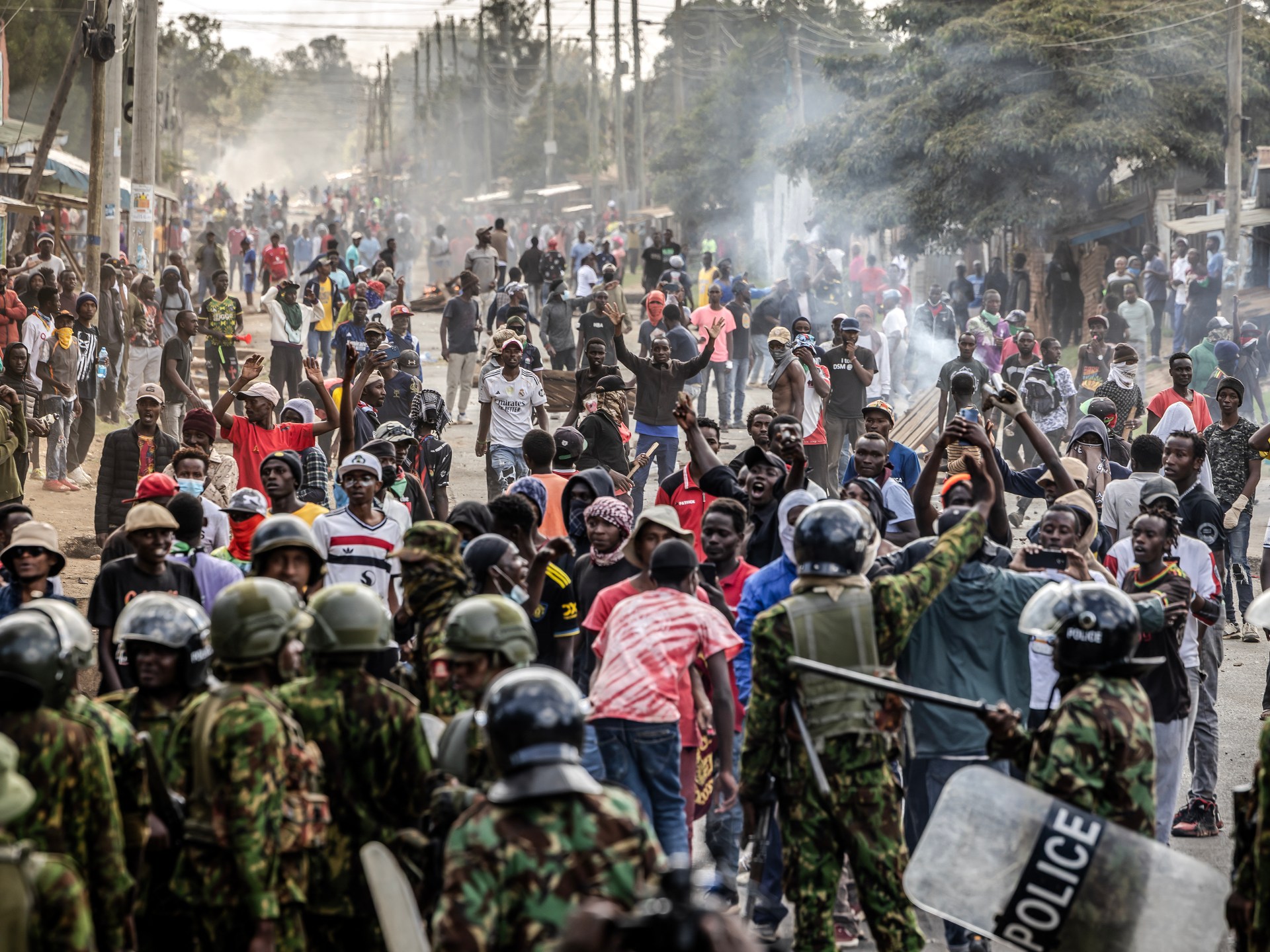

Nairobi, Kenya – The death of a 17-year-old schoolboy during protests against a planned US Ebola quarantine facility has transformed a public health project into one of Kenya’s most contentious political controversies this year.
Three people have now been killed, a court challenge has halted construction, and the proposed 50-bed centre at Laikipia airbase in Nanyuki has triggered fierce debate over public participation, sovereignty and foreign influence.
But in Laikipia, the anger runs deeper than the events of the past few weeks.
The facility, intended to quarantine American citizens potentially exposed to Ebola during outbreaks in East and Central Africa, has reopened long-standing grievances in a county where the legacy of British colonial rule remains etched into the landscape. For many residents, the controversy is not simply about disease or public health. It is about land, power and a history that never fully disappeared.
Laikipia occupies a unique place in Kenya’s colonial story. Large parts of the county once formed part of the White Highlands, where some of the country’s most fertile land was reserved for European settlement. More than six decades after independence, descendants of settler families continue to own vast ranches and conservancies, while disputes over land ownership and historical injustice remain unresolved.
As protests against the quarantine centre intensified, those grievances resurfaced with renewed force, exposing how questions first raised more than a century ago continue to shape reactions to foreign involvement in Kenya today.
Advertisement
The tensions are hardly new.
In May 2021, famed Italian-born conservationist and author Kuki Gallmann was shot by cattle raiders while driving through her conservancy in Laikipia County.
Gallmann’s 40,500-hectare (100,000-acre) ranch is among the largest and most controversial privately owned properties in the region.
At the time of the attack, Kenya was experiencing a severe drought that had pushed pastoralist communities far beyond their usual grazing routes in search of pasture and water for their livestock.
Gallmann’s land had both.
But like many large ranches and conservancies across Laikipia, it was largely inaccessible to herders whose animals were dying as grazing land disappeared. The result was a bitter confrontation that once again exposed the unresolved tensions surrounding land ownership in the county.
It was not the first time Gallmann or other large-scale landowners had been targeted in attacks linked to grazing disputes. While Gallmann survived being shot, other ranch owners have been killed in separate incidents over the years.
For many residents, those conflicts are symptoms of a deeper historical dispute.
The controversy surrounding the quarantine centre has reopened many of the same questions.
History of colonial land dispossession
Before colonial rule, Laikipia was home to Maasai, Samburu and other pastoralist communities who moved seasonally across vast grazing lands.
The roots of today’s disputes can be traced to the early years of British colonial rule.
When Kenya became a British protectorate in 1895, colonial authorities assumed control over large areas of land. Subsequent laws gave administrators sweeping powers to allocate territory to European settlers.
Large parts of Laikipia were incorporated into what became known as the White Highlands, a system that reserved some of Kenya’s most fertile land for European settlement.

Historians trace many of the grievances that persist today to the 1904 and 1911 Maasai agreements, which facilitated the relocation of Maasai communities from parts of Laikipia and the Great Rift Valley as colonial settlement expanded.
Other regions designated for white settlement included parts of the Mount Kenya region, Uasin Gishu, Naivasha, Nakuru, Kericho, Trans Nzoia and Mount Elgon.
Over time, millions of acres were transferred into settler ownership while African communities found themselves increasingly excluded from land they had traditionally occupied or used for grazing.
Advertisement
According to David Kyule, a professor of History and Archaeology at the University of Nairobi, the prolonged presence of settler families in Laikipia continues to shape local perceptions of foreign involvement in the region.
“There is a reinforcement of the perception that Kenyan territory remains available for strategic foreign purposes. Whenever the British didn’t want any undesirables in their land, they would send them away to African countries. That is what the US is doing,” Kyule told Al Jazeera.
The quarantine centre, according to him, is viewed by some residents through the lens of historical experiences with foreign powers.
The continued presence of the British military in Laikipia has also remained controversial over the years.
Some residents and activists argue that the presence of foreign military forces reinforces perceptions that strategic decisions affecting the county are often influenced by interests beyond the local community.
Question of sovereignty
The United States’ growing presence in Kenya has raised concerns among some residents in recent years.
For decades, Britain maintained the most visible foreign military footprint in Kenya. In recent years, however, the US has expanded its security partnerships in the region, including operations in northern Kenya and at Manda Bay in Lamu County.
Against that backdrop, the proposed quarantine centre has become a lightning rod for wider concerns about sovereignty and foreign influence.
US officials say the facility is intended to strengthen preparedness for future Ebola outbreaks and provide a controlled environment for monitoring American citizens who may have been exposed to the deadly virus.
Kenya’s position as a regional transport and logistics hub, combined with its existing security and health partnerships with Washington, has been cited as a key reason for selecting the country.
Supporters describe the project as a public health investment.

Critics remain unconvinced.
Appearing before the Parliament of Kenya on June 3, Health Cabinet Secretary Aden Duale defended the government’s decision to proceed with the project.
“Under the Public Health Act, we don’t need to do public participation; we are not going to consult citizens. Even MPs, when they fall sick, rush to the doctor to make sure they get the best treatment. This epidemic does not require any consultation,” Duale told Parliament.
The remarks triggered fresh anger among opponents of the project, many of whom argue that constitutional requirements for public participation cannot simply be set aside.
Kelvin Kubai, an advocate of the High Court of Kenya, told Al Jazeera that Articles 10 and 118 of the Constitution establish public participation as a national value that should guide major government decisions.
According to Kubai, concerns about the facility cannot be separated from Laikipia’s history.
Advertisement
“In a nutshell, once bitten, twice shy. The present agreement is akin to the 1904 and 1911 Maasai agreements, which, disregarding public participations, surrendered the vast rich savannah grazing lands of Laikipia to foreign interests, a mistake that the people of Laikipia ain’t willing to repeat again,” he explained.
Why Kenya and why now?
Questions have also been raised about why Kenya was selected to host a facility that critics say would primarily serve American citizens and would not be available for routine use by Kenyans in the event of a domestic outbreak.
Some activists and local leaders have questioned whether public health concerns alone explain the urgency surrounding the project.
Recent reporting has suggested that Washington’s Ebola response strategy is unfolding against a backdrop of wider geopolitical competition, particularly in Africa, where both the US and China have sought to expand their influence.
Some analysts argue that the facility could also help reinforce Washington’s presence in East Africa at a time of growing strategic competition.
US officials reject suggestions that the project serves any purpose beyond public health preparedness.
Residents living near Laikipia airbase remain sceptical.
Marlin Ndegwa, a community leader in Nanyuki, told Al Jazeera that residents are still searching for answers about why the project is being pursued despite public opposition.
According to Ndegwa, many residents see the dispute through the prism of longstanding grievances over land ownership and foreign involvement in the county.
The question has become increasingly urgent as tensions have escalated.
Three people have now been killed during separate demonstrations against the facility.
The latest victim was a 17-year-old schoolboy who had left home to collect his school uniform from his aunt’s house on the day protests erupted.
His death has become a symbol of how a project designed to prepare for a future health emergency has instead exposed deep and unresolved questions about Kenya’s colonial past.
More than a century after colonial authorities transformed Laikipia’s landscape, debates over land, sovereignty and foreign influence continue to shape the county’s future.
According to Kyule, those questions remain at the heart of the controversy.
“One wonders,” he said. “Is it because you cannot say ‘no’? Or is it because our sovereignty is compromised?”
Related News
North Korea needs China for survival: Why does Beijing need Pyongyang?
Israel preventing more than 16,500 Palestinians from accessing medical treatment
FIFA World Cup Day 3: Brazil vs Morocco prediction, schedule, what to know