
The United States and Israel’s war on Iran has pushed up the price of nearly everything.
In the early days of the war, the global supply of oil, gas and fertilisers was the main focus of this crisis.
- list 1 of 3Israeli strike kills five in Gaza, including three children
- list 2 of 3Israeli forces levelling Lebanese villages behind ‘yellow line’
- list 3 of 3What we know about Israel killing Lebanese journalist Amal Khalil
end of list
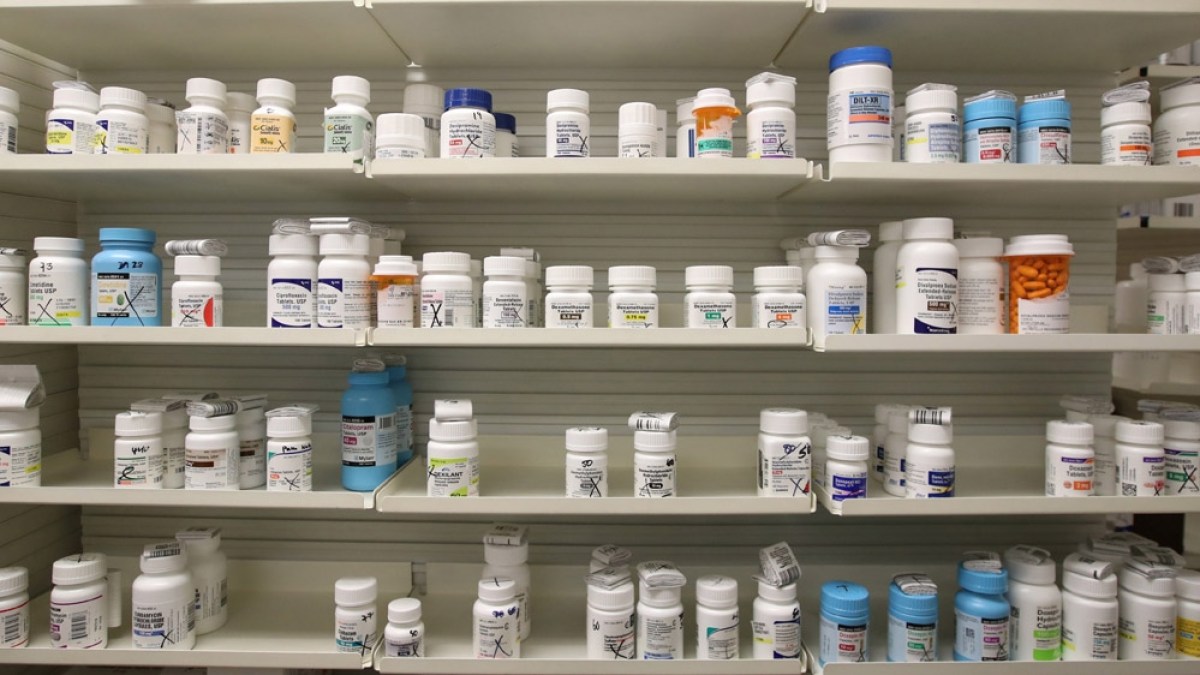
In recent days, however, pharmacists have also noted a spike in the price of medicines and contraceptives like condoms, as a result of the war. In the United Kindom, for example, pharmacies are charging 20 to 30 percent more for over-the-counter medicines, and the common painkiller paracetamol has more than quadrupled in price. In India, chemists are reporting price rises of common painkillers of as much as 96 percent.
We break down the reason behind the rise in prices and how badly countries around the world will be affected:
Why has the price of medicines and contraceptives increased?
Since the early days of the war, Iran has blocked the Strait of Hormuz, through which 20 percent of the world’s oil and liquefied natural gas (LNG) supplies are shipped in peacetime. Experts say this has also disrupted pharmaceutical supply chains, which are reliant on the oil supply.
“Pharmaceuticals are tied to both petrochemical feedstocks, a large part of which are sourced through the Persian Gulf,” Frederic Schneider, a nonresident senior fellow at the Middle East Council on Global Affairs, told Al Jazeera.
“Furthermore, some logistics routes, including for pharmaceuticals, for example, between East Asia and Europe, have important sea and air transhipment stops in the Gulf, particularly in Dubai. These routes are especially fragile because many pharmaceuticals need special handling, including an unbroken cold chain. Both have been disrupted through the war,” he added.
Advertisement
Wouter Dewulf, a professor at the University of Antwerp in Belgium and an expert in pharma logistics, warned that while pharmaceutical supply chains are not in immediate danger, medicines are highly exposed to air logistics.
The US-Israel war on Iran has caused severe disruption for airlines, featuring widespread cancellations, airspace closures and a looming jet fuel crisis.
“35 percent of pharmaceuticals move by air, and about 90 percent of critical or life-saving pharmaceuticals and vaccines do so too. I estimate that 22 percent of global air cargo flows are exposed to Middle East disruptions,” he said.
“So the main global effect for now is delays, rerouting, and higher costs, rather than a worldwide physical shortage.
“There might be some modest price increases on pharmaceuticals, because of the increase in air cargo fares, mainly on the east-west corridors. For generic medicines, where the margins are much thinner, the relative increase in price might be higher,” he added.
Which pharma products have become expensive?
Condoms
On Tuesday, Goh Miah Kiat, the CEO of Karex, the world’s top condom producer, said prices will have to rise by 20 to 30 percent to contend with the ongoing disruption to supply chains.
“The situation is definitely very fragile, prices are expensive… We have no choice but to transfer the costs right now to the customers,” he told the Reuters news agency.
Karex produces more than 5 billion condoms per year, supplying top brands like Durex and Trojan, and also to global aid programmes run by the United Nations.
Miah Kiat noted that because of shipping disruptions, cargoes of condoms en route to Europe and the US from his Malaysia-based company are still at sea.
“We’re seeing a lot more condoms actually sitting on vessels that have not arrived at their destination but are highly required,” he said, and added that many developing countries also do not have enough stock.
Paracetamol
Pharmacies in the UK and India have noted an increase in the price of paracetamol, a drug commonly used to treat headaches and the flu.
“Paracetamol is rising by approximately 96 percent,” a former board member of the Visakha Chemists Association in India told the country’s Economic Times on April 17.
He said a spike in the price of raw materials used to make such drugs is to blame and added that paracetamol could rise further in price, by 30 to 40 percent.
In the UK, the price of paracetamol has also increased.
Olivier Picard, chair of the National Pharmacy Association (NPA) told The Guardian newspaper that the price he pays wholesalers for a pack of 100 500mg paracetamol tablets had jumped 41 pence (55 cents) to 1.99 pounds ($2.69) by the end of March, but has since eased back to 1.09 pounds ($1.47).
Advertisement
Which countries are most affected?
While the price of medicines has already begun increasing in some countries, Schneider told Al Jazeera the impact across the globe will depend on several factors, including whether other suppliers are available.
“The US has domestic hydrocarbon and petrochemical supply, and China can source most of its demand from elsewhere. India, however, is a major producer of pharmaceuticals and depends on supplies from the Gulf, which is a major chokepoint in the global pharmaceutical supply network,” he said.
Schneider said another crucial factor to consider is strategic stockpiling.
“The EU, for example, has a ‘solidarity mechanism’ – a recent stockpiling strategy that includes pharmaceuticals – and country-specific stockpiling requirements of two-10 months’ worth of medicines. While some Global North countries, like the NHS in the UK, are sounding the alarm bells and warn of shortages in the weeks ahead,” he noted.
“The problem is, as with most supply-chain problems, more acute for Global South countries, and sub-Saharan Africa in particular, that have fewer or no stockpiles and not enough financial heft to afford the price increases due to the supply crunch, as well as countries currently experiencing humanitarian crises, like Sudan, Yemen and Palestine,” he explained.
“The situation in the GCC remains apparently stable, with governments assuring that their supply is secure, but that may change if things turn for the worse again,” he added.
Dewulf said the countries most likely to suffer are the ones directly touched by the conflict and regional disruption.
“The real exposure is in Lebanon, Palestine, and Iran, rather than across the global market,” he said.
“I would add a second group: Fragile, aid-dependent countries that were already under severe pressure before this war,” he said.
A third, more conditional risk group is the import-dependent Gulf markets, he said, especially for cold-chain and cancer medicines. “Those flows were rerouted when major hubs such as Dubai, Abu Dhabi and Doha were hit [by air strikes].
“In the Middle East, the picture is still more manageable than in conflict zones: There are risks and delays, not yet a generalised collapse, especially since the airlift is gradually coming back. Pharmaceuticals always have priority as the yield to transport pharmaceuticals is higher,” he added.
Related News
Hopes grow for a breakthrough in US-Iran talks as Pakistan mediates
Iran-US war: Four scenarios for what’s next as talks stumble
Mixed views in Lebanon ahead of controversial talks with Israel