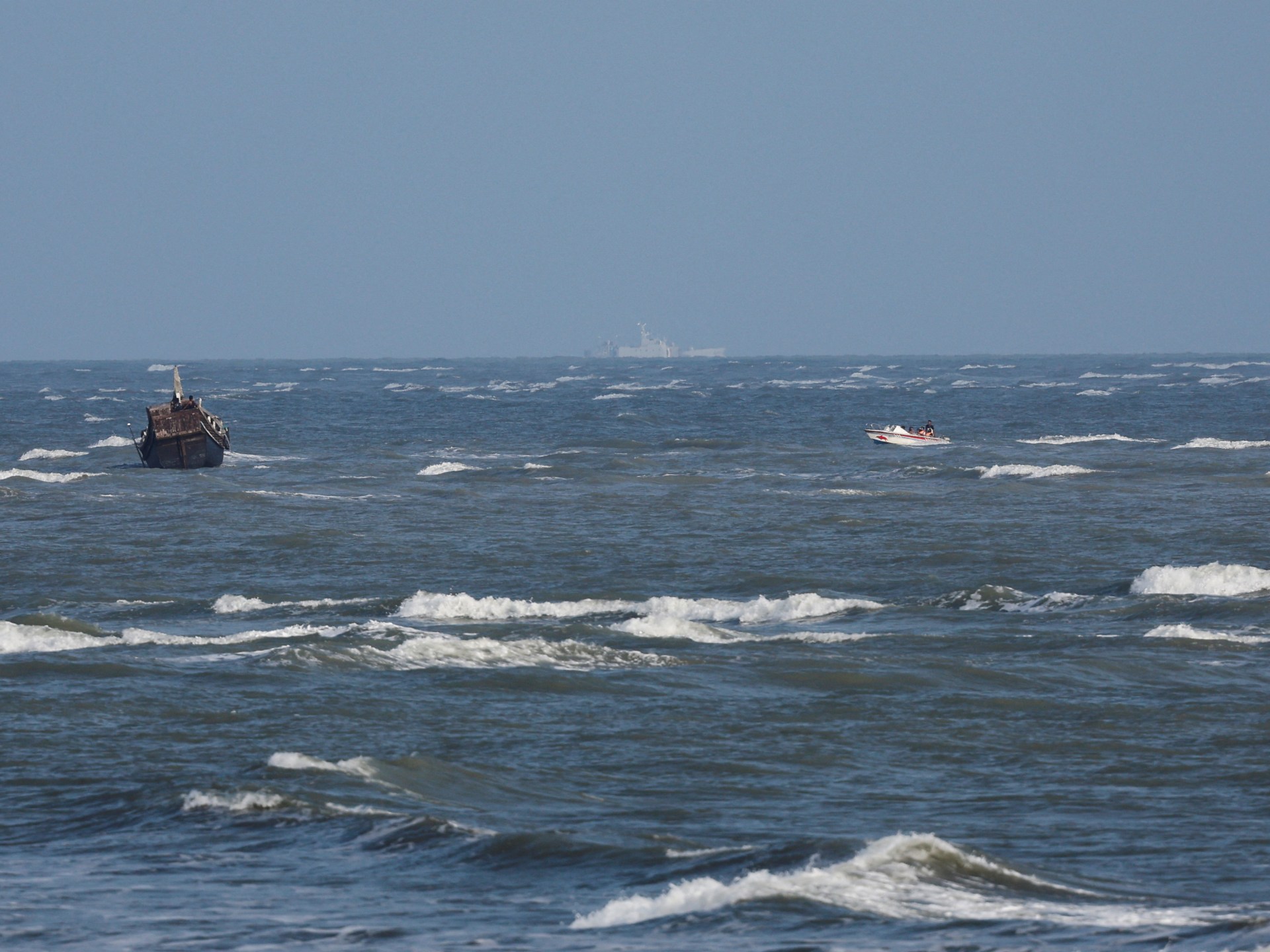

Two boats carrying more than 500 people are feared to have capsized off the coast of Myanmar in recent days, United Nations agencies have said.
According to preliminary information reported on Thursday by the International Organization for Migration (IOM) and the UN refugee agency (UNHCR), the two vessels departed from Myanmar’s Rakhine State in late June carrying mostly Rohingya passengers.
- list 1 of 3Myanmar’s blanket prison term reduction trims Aung San Suu Kyi’s sentence
- list 2 of 3Bangladesh’s top diplomat elected UN General Assembly leader in tight race
- list 3 of 3India’s Bengal pushes Muslim Bangladeshis out, deepening religious tensions
end of list
One boat, believed to have been carrying about 250 people, lost contact shortly after departure. A second boat, reportedly carrying some 280 people, is believed to have sunk off Myanmar’s Ayeyarwady coast on July 8, they said.
“While the incidents and casualty figures have yet to be officially confirmed, UNHCR and IOM are gravely concerned by the potentially devastating loss of life,” read the statement.
Before the latest incidents, more than 300 people had been killed or reported missing in the Andaman Sea and Bay of Bengal, it said. These included Rohingya refugees and Bangladeshi nationals, it added.
″While the incidents and casualty figures have yet to be officially confirmed, UNHCR and IOM are gravely concerned by the potentially devastating loss of life,” the agencies said.
The Rohingya, who have in recent years fled both Myanmar and Bangladesh’s refugee camps by the thousands, typically avoid such boat journeys at this time of year, when monsoons are frequent, and conditions at sea are particularly dangerous. The UNHCR and IOM noted this in their statement, saying that recent torrential rain and flooding across the region would have made such journeys especially risky.
About 1.2 million stateless, predominantly Muslim Rohingya remain in overcrowded refugee camps in Bangladesh after fleeing waves of violence by Myanmar’s security forces. Steep cuts to foreign aid by the US and other countries have led to ration cuts in the camps.
Advertisement
The refugees have no way to safely return to Myanmar, where the military that killed thousands of Rohingya in 2017 during what several countries have declared a genocide remains in charge of their homeland. The Rohingya still living in Myanmar face severe restrictions and many are confined to internment camps, while the military and an armed group in Rakhine have fought for control of the region.
The unrest has led to an increasing number of Rohingya attempting to make the dangerous ocean crossing to Malaysia on rickety boats. Thousands have died in the process, including babies, children and pregnant women. Local maritime authorities have frequently abandoned the Rohingya at sea, often ignoring reports of boats in distress.
The IOM and UNHCR said on Thursday that the latest potential tragedy at sea underscores the continued lack of sustainable solutions for the Rohingya, and urged the international community to support those trapped in Bangladesh’s camps.
“Stronger regional and international efforts are needed to prevent further loss of life along one of the world’s deadliest maritime routes, including through enhanced search and rescue efforts, access to asylum and protection, and actions against smuggling and trafficking networks,” the agencies said.
More than 6,500 Rohingya fled, and nearly 900 were reported dead or missing in 2025, the deadliest year for Rohingya who tried to leave by boat. The figure represents the highest mortality rate of any major route for refugee and migrant sea journeys in the world, the UNHCR said.
Related News
US aircraft carrier expected to relieve USS Lincoln in Middle East
China missile test draws criticism from Australia, New Zealand, Japan

India’s ‘cockroach’ protest movement halts marches after police violence