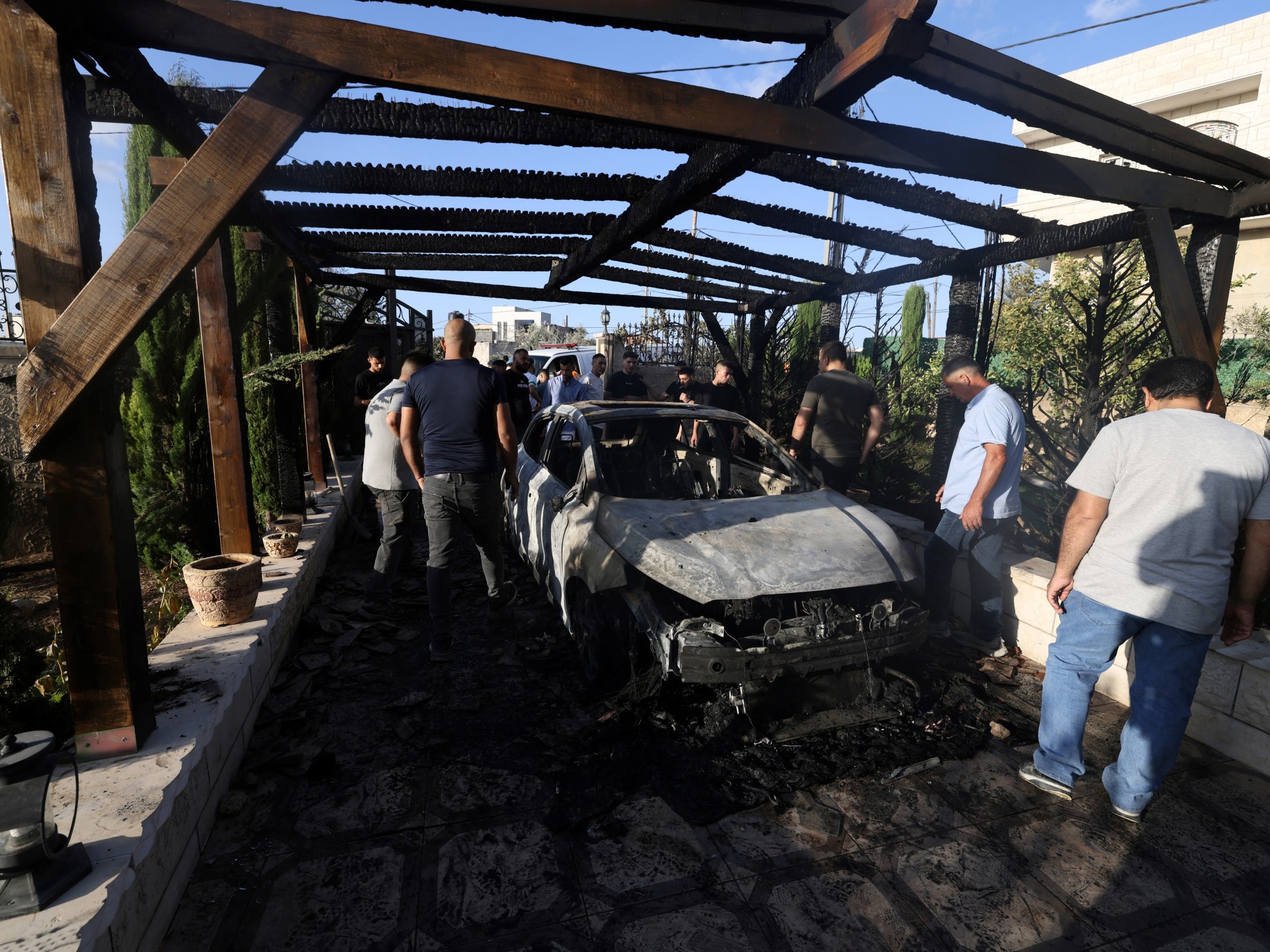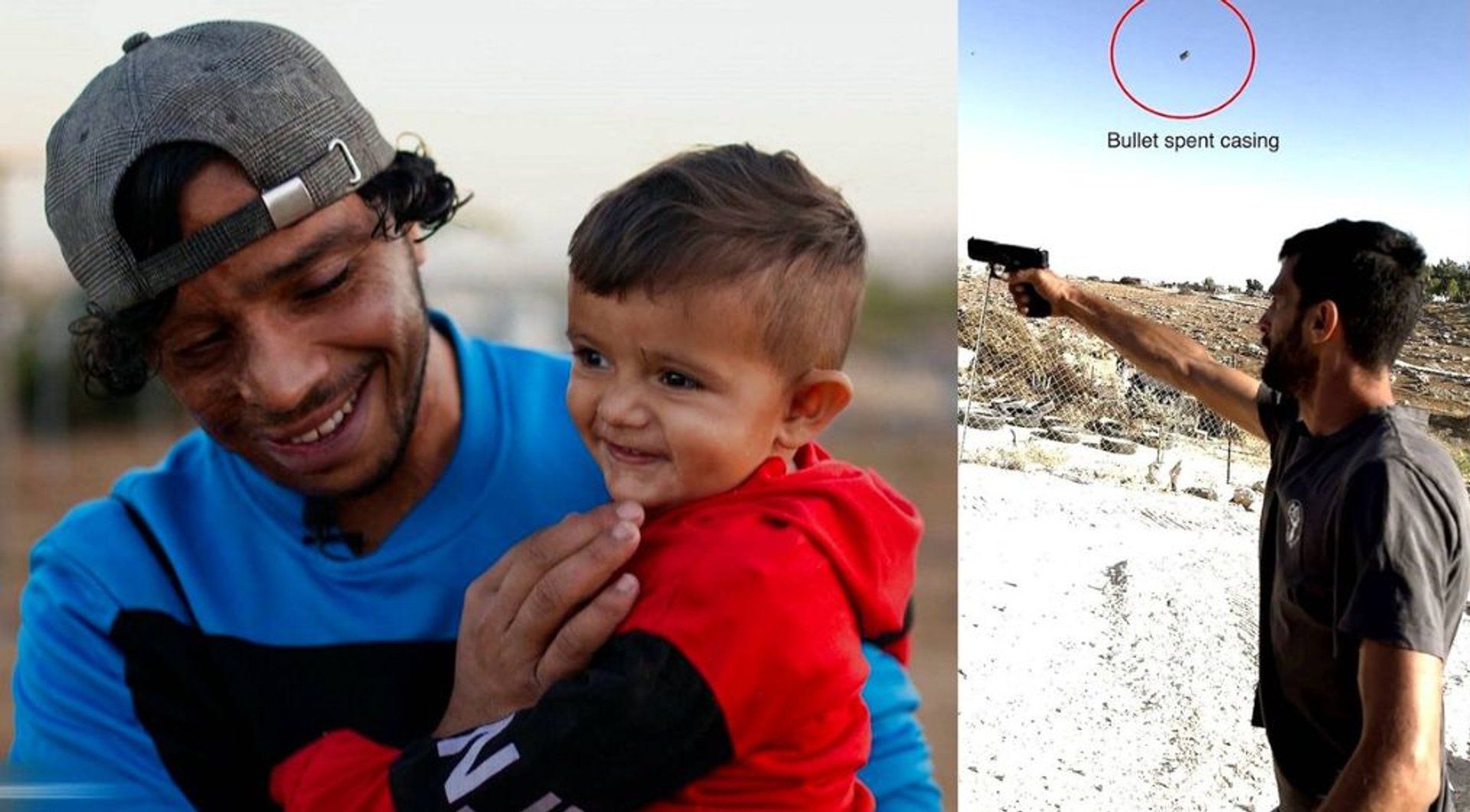

Palestinian activist and father of three Awdah Hathaleen pulled out his mobile phone and started filming when an armed settler raided the village of Umm al-Khair in Masafer Yatta in the southern occupied West Bank on July 28, 2025.
Unknowingly, the 31-year-old — who previously helped with production on the Oscar-winning documentary “No Other Land” — was filming his final moments.
- list 1 of 3‘No freedom at all’: Israeli closures leave West Bank patients trapped
- list 2 of 3West Bank quarry owner appeals to Trump after settler raid
- list 3 of 3Israel kills Palestinian, destroys mosque in Gaza
end of list
Palestinian rights group Al-Haq reviewed dozens of videos and photographs from the scene, cross-referenced legal testimony, and ran geospatial and open-source analysis to reconstruct what happened.
The investigation, released on the first anniversary of the killing of Hathaleen, concluded that Israeli settler Yinon Levi had fired the bullet that killed him. He is still evading justice.
At an Israeli court, Levi claimed there was no correlation between the shot he fired and Awdah’s killing, but Al-Haq’s report compared the autopsy report with the firearm Levi was carrying.
The autopsy found that a single bullet to the chest caused fatal bleeding. The one-centrimetre (0.4-inch) defect in his chest matches the nine-millimetre handgun Levi used. The weapon has been identified as an Israeli-manufactured firearm, often used by Israeli settlers.
Levi then claimed he was acting in self-defence, but Al-Haq’s evidence establishes the absence of any imminent threat. The report found that none of the Palestinians at the scene was armed and that Hathaleen posed no danger at all when the trigger was pulled.
On the day of the attack, Levi was among other Israelis who brought their excavators and started doing land-levelling works for the establishment of a new illegal settlement outpost. But workers deviated from the expected route and entered privately owned land belonging to residents of Umm al-Khair.
Advertisement
Minutes earlier, tensions had been aggravated: the excavator’s hydraulic hammer struck Awdah’s cousin, Ahmad Hathaleen, in the head, while being wielded by a second settler, Rony Avraham.
Witnesses told investigators that Levi struck several residents himself later on, including two women, before he raised his weapon.
But Levi was not arrested at the scene. On the contrary, he was filmed standing with the Israeli forces and pointing out Palestinians and international activists who were later arrested. And even after he was detained, following international outcry, an Israeli court agreed to release Levi, placing him under house arrest for just three days.
This detail, according to the report, indicates an “operational alignment with the settlers’ actions, manifested through the provision of protection and the absence of law enforcement measures against settlers, who were not treated as criminal suspects”.
Even the ambulance rushing to save Hathaleen’s life was held back — Israeli settlers blocked the access road while Israeli soldiers and police looked on, investigators found.
His body was not returned to his family for burial for 10 days. Women in the village started a hunger strike to demand Awdah’s body be returned for burial.
Levi himself was known to harass the residents of Masafer Yatta before and after the shooting.
The report identifies Levi as “a key settler actor” in the southern West Bank, adding that his actions were directly linked to the displacement of Palestinian communities there. He runs Meitarim Farm, an illegal settlement outpost in the Southern Hebron Hills, and draws manpower from Hashomer Yosh, an Israeli group that funnels volunteers into outposts like his, part of what the report calls a wider machinery propping up settlement growth across the West Bank.
The report is called: “The Killing of Awdah Hathaleen: Beyond a Settler Crime” and says Israeli settler violence forms part of a broader pattern of repeated violent and criminal conduct.
Al-Haq says the killing was not an isolated act – but an example of intentional state-backed violence.
Israeli settler attacks in the past few years have been on the rise, according to UN figures. Settler violence contributes to creating a hostile environment that eventually displaces Palestinians from their lands and replaces them with illegal Israeli settlements.
For Palestinians here, mobile phones have become one of the only tools they have — to document what is happening to them, and to try to get justice, which, until now, has been elusive.