
Manila, Philippines – It has been 10 years since former Philippine President Rodrigo Duterte launched his nationwide crackdown on illegal drugs – and it has been that long since Lovely and her siblings became orphans.
Both their parents were accused of involvement in the narcotics trade. Both surrendered before being shot dead inside their Manila home, in front of their children, in 2016.
Recommended Stories
list of 3 items
- list 1 of 3Philippines drug war victims seek justice through truth commission
- list 2 of 3Duterte in person at ICC for first time over ‘war on drugs’ killings
- list 3 of 3Philippines ex-President Duterte fit to stand trial, ICC rules
end of list
“They were a group of seven men, but only three broke into our home. They wore helmets and masks. It was past midnight,” recounted the 21-year-old, who still fears for her life and did not want to be identified by her real name.
“My father was asleep. They kicked him, and as soon as he opened his eyes, one of them shot him. They left, but then five minutes later, they came back,” she continued.
“My mom knelt and begged to spare her, but they shot her in the head. If my memory serves me right, they shot her 11 times. They used all the remaining bullets on her. I’m still angry.”
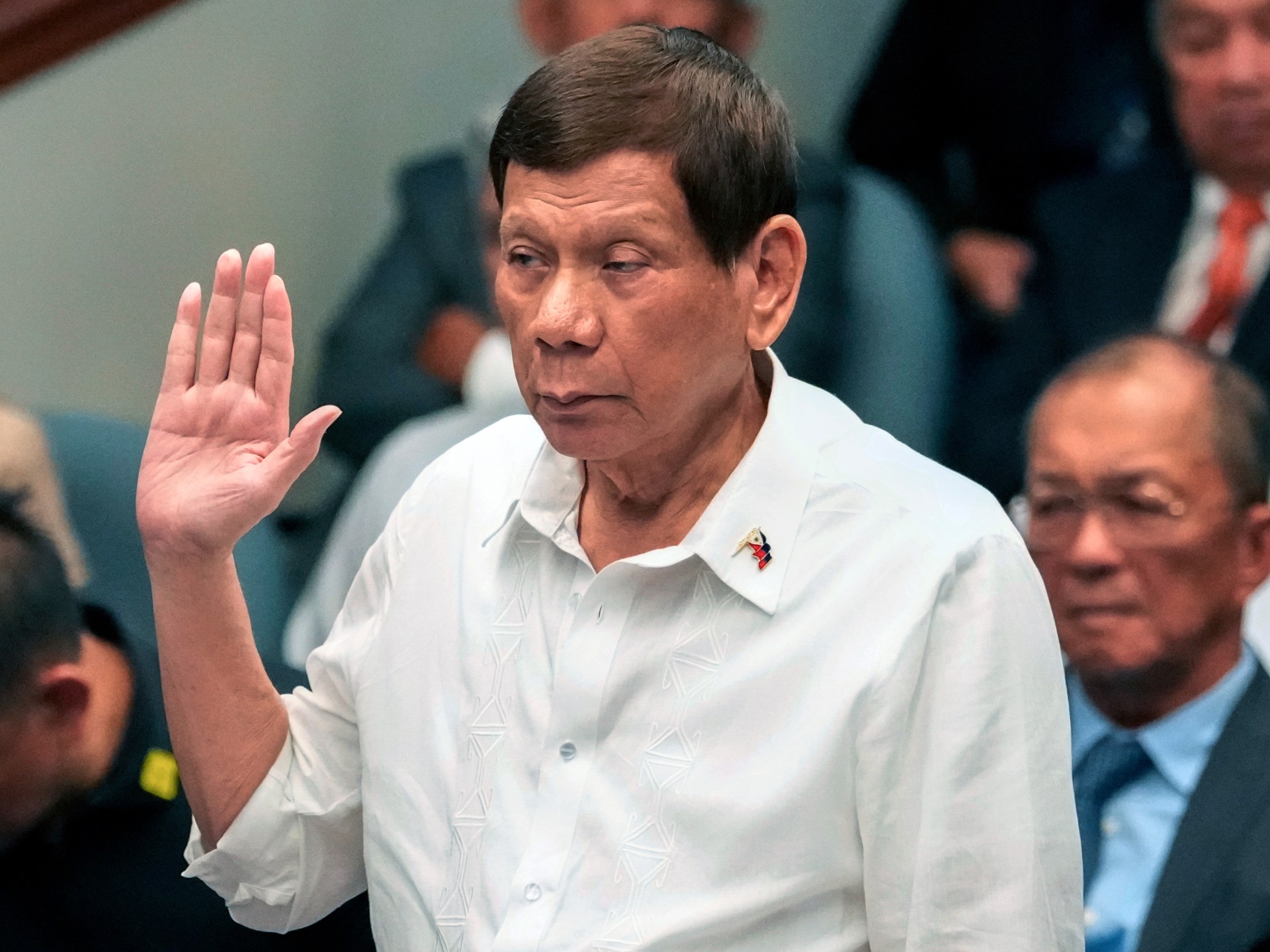
Duterte is due in the International Criminal Court (ICC) on Monday for the first day of his trial for crimes against humanity in relation to deadly crackdowns on drugs allegedly committed during his time as president and mayor of the city of Davao. The 81-year-old denies the charges.
In September 2021, the Office of the Prosecutor of the ICC at The Hague opened a formal investigation into the alleged extrajudicial killings, three years after it first began examining the case. By the end of Duterte’s six-year presidential term in 2022, police had reported that its antidrug operations had resulted in about 6,200 deaths. Human rights watchdogs estimate that police and unidentified armed men killed 20,000 to 30,000 people.
Advertisement
Duterte withdrew the Philippines from the Rome Statute – the international treaty that established the ICC – in 2019, in an effort to block the inquiry. But the court ruled it has jurisdiction over events that took place from 2011 to 2019, when the country was a member.
Last year, Philippine authorities arrested Duterte at Manila’s international airport and subsequently handed him over to the ICC. He has since been detained at The Hague.
‘Long road ahead’
And while ICC prosecutors formally brought criminal charges against Duterte, the initial investigation was triggered after Filipino lawyers, human rights and civil society organisations, along with families of victims, filed complaints.
It was also through these advocates that Lovely said she and her siblings were able to survive and find a community that shares their thirst for justice.
“I know there is still a long road ahead. But seeing Duterte in court is something I never expected. I had almost lost hope. Now, I want to tell my mom that I’m not going to stop until justice is served,” said Lovely.
One unlikely place where survivors have found support was Silingan Coffee, a cafe that exclusively hires relatives of the victims of the so-called “war on drugs”, where Lovely works as a barista – a job that is helping pay for her college education.
Another employee is Angel, whose husband was shot dead in front of their 10-year-old child in a Manila suburb before Christmas in 2016.
“Working here has opened my eyes,” said Angel, who also requested anonymity out of safety concerns. “Before I found Silingan, I rarely talked about what happened. I did not know who I could talk to. Here, we are family. We turned our lives around together and from victims, we became survivors.”
With Duterte facing trial at the ICC, Silingan now allocates its earnings every Tuesday towards a fund for families of victims to be able to travel to The Hague.
One of the beneficiaries is 73-year-old Clarita Alia, a vegetable vendor in Duterte’s hometown of Davao.
Between 2001 and 2007, when Duterte was mayor, four of her sons were stabbed to death after police accused them of involvement in illegal drugs.
“The first time police officers came, they told me to surrender my son, Richard. But they did not have a warrant, so I did not. They threatened to kill my sons one by one,” said Alia.
“And Duterte himself had warned publicly that criminals should go into hiding or else they will be killed.”
But because Alia’s sons were killed before the Philippines became a member of the ICC, their cases were excluded from the investigation. Even so, she said she feels vindicated.
Advertisement
“When I saw in the news last year that Duterte had been arrested, I couldn’t thank God enough. I had been praying for so long. Finally, the demon is in prison,” Alia said.
That Duterte is in detention – in a foreign land – however, does not sit well with some Filipinos, even though legal experts have said the ICC is an international body and not a foreign court.
“We have a functioning justice system. Why did they take him to The Hague without going through a local court? He’s a Filipino. Would any Filipino want to be tried elsewhere?” said Rogelio Allarde, a village peacekeeping volunteer in Quezon City, a Manila suburb.
Duterte remains one of the Philippines’ most popular politicians. He has maintained he never ordered the murder of criminals, and that in most cases, police killed in self-defence.
“During Duterte’s presidency, we felt safer. As a mother, I worried less about my children doing or dealing drugs,” said Alicia Salgado, a Quezon City resident.
Duterte’s daughter, Vice President Sara Duterte, is widely considered to be the frontrunner in the country’s 2028 presidential election, though she could be barred from running if she is convicted in an ongoing impeachment trial.
The vice president has said she does not expect the ICC to conduct a fair trial.
“This is the only remaining case in the ICC, and I think after the ganging up of superpowers, they would want to make a statement that they are in the right,” Sara Duterte said in a news conference on Friday.
“If you look at the opinion of other countries, particularly China, Russia, our best friend, the United States, they would say that this is a political organisation. It doesn’t serve any interest at all except theirs.”
But families of victims allege police intimidated them into silence.
“They were constantly going around our neighbourhood. It made us fearful to even make the first step towards filing a case,” said Angel.
US-based watchdog Human Rights Watch said in a report released last week that families were pressured to sign waivers forgoing an autopsy report and agreeing not to press charges, so that they could claim the bodies of their loved ones.
A civilian-led Truth Commission launched in May has found at least 13 cases in which people were shot but whose death certificates indicate illnesses such as pneumonia or heart attack as the cause of death. To date, only five cases have ended in the conviction of nine police officers. Only a handful are currently being heard in court.
Lovely said it is impossible to seek justice in the Philippines without putting herself and her siblings in even more danger. She is grateful that the ICC exists as a court of last resort – but she said nothing can erase the trauma.
“It’s been so long, but every moment of that night is still fresh in my mind,” said Lovely. “Yet for some reason, I have to keep looking at photos to remind me of my parents’ faces.”
Related News
Floods in Gaza leave tens of thousands without shelter
US army says detonation of lead explosives in Iowa will proceed
Pope Leo becomes first pontiff to vote in US general election