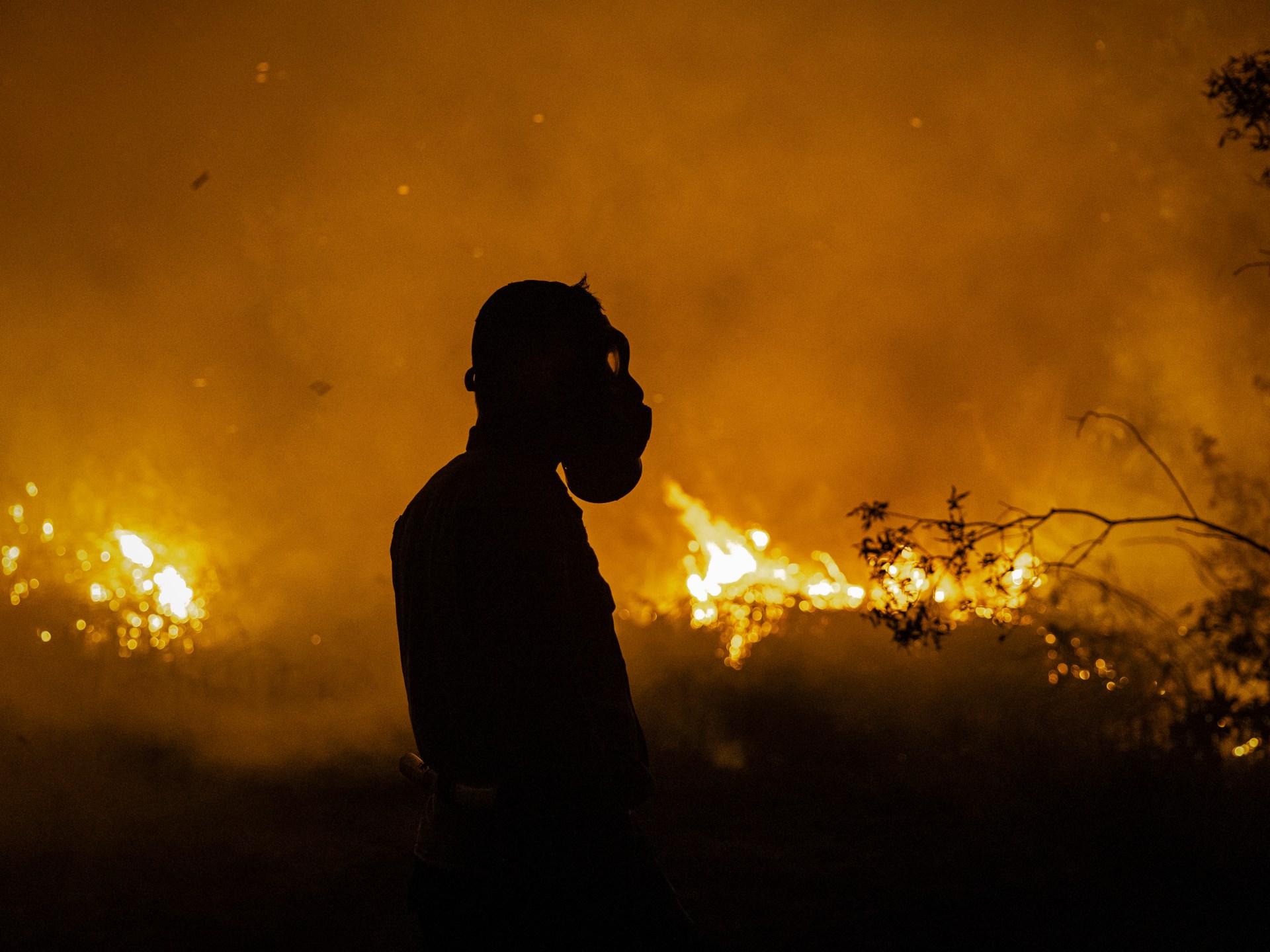

A rapidly intensifying El Nino event is set to dominate global weather patterns in the coming months, unleashing extreme weather across the planet, the World Meteorological Organization (WMO) has warned.
The United Nations weather agency’s latest update, released on Friday, said that the periodic climate phenomenon threatens to heighten the risk of heatwaves, drought, and flooding around the globe. The report comes as countries in Africa and Europe are battling massive wildfires, while monsoon season has caused havoc across South Asia.
- list 1 of 3France and Spain brace for heatwave that could worsen raging wildfires
- list 2 of 3Wildfires spread in Greece and Turkiye as EU chief urges climate action
- list 3 of 3Europe’s heating climate sparks ‘major intensification’ of fires: Report
end of list
“El Nino is not just on our doorstep, it is inside the house and turning up the heat,” UN Secretary-General Antonio Guterres said. “This is only a warm-up act. El Nino is strengthening, adding fuel to a planet already on fire.”
Central Pacific sea-surface temperatures are projected to soar more than 2.9 degrees Celsius (5.22 degrees Fahrenheit) above normal. The abnormal warming of surface waters is set to upend weather systems and drive global temperature spikes.
Guterres urged nations to fast-track climate action as the impact of El Nino converges with human-induced climate change.
He specifically pointed to fossil fuel expansion as the core driver amplifying the crisis, calling for an immediate halt to new coal, oil, and gas projects.
The WMO projects above-normal temperatures across nearly all land areas, with the most intense heat signals stretching across Africa, southern Europe, the Indian subcontinent, East Asia, and South America.
WMO Secretary-General Celeste Saulo said that while El Nino is closely tracked, early warnings must translate into concrete action by governments and humanitarian agencies to safeguard vulnerable communities.
Advertisement
“Forecasts in themselves do not prevent hazards; people do,” Saulo said. “The decisions we make today will shape the impacts we experience tomorrow.”
Scientists caution that this year’s El Nino could reach record intensity when it peaks in the latter half of the year, although computer model projections remain uncertain.
Related News

Germany’s Merz defends NATO spending after Trump calls it ‘ridiculous’
UN launches hunt for next chief amid rising challenges

Iran war live: Tehran-US MoU set to expire; Hamas’s al-Khayya meets Kushner