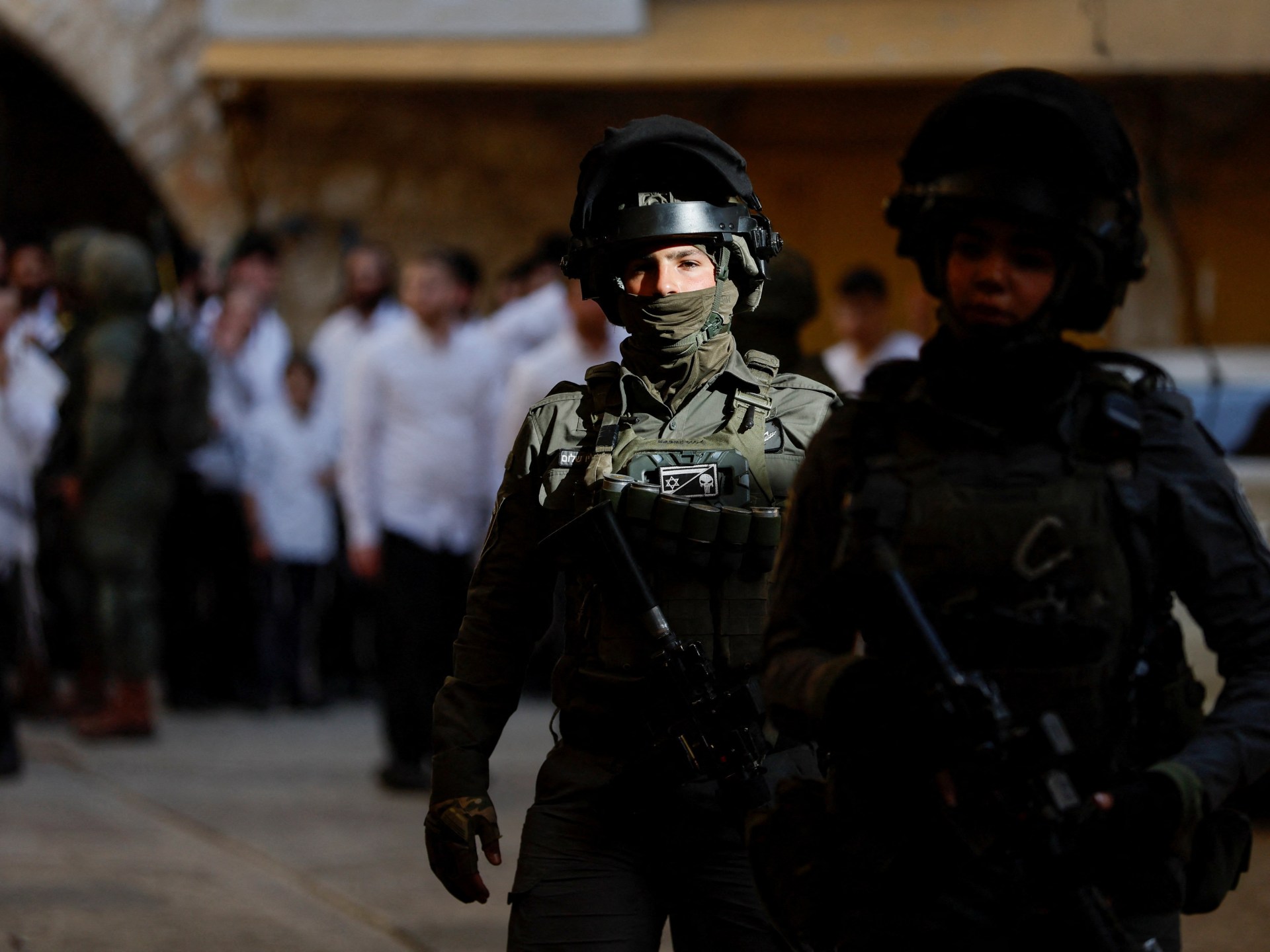

After more than two years of relentless bombardment and war – from Israel’s genocide in Gaza and the Hamas-led assault on southern villages in October 2023 that preceded it, to the country’s successive wars and strikes on Iran, Lebanon, Syria and other neighbouring states – analysts, observers, and numerous studies from within Israel have concluded that the country has become moulded by trauma.
A recent survey by Maccabi Healthcare Services found that about one-third of Israelis believe they need professional mental health support. Among those who have served in the army, as either conscripts or reservists, the picture is even starker. In January, Israel’s Defence Ministry reported a near-40 percent rise in the number of post-traumatic stress disorder (PTSD) cases among its soldiers since September 2023, with a 180 percent increase expected by 2028.
- list 1 of 4Netanyahu vows to ‘smite’ Hezbollah with ‘overwhelming’ force
- list 2 of 4‘May your village burn’: Israeli Flag March returns to East Jerusalem
- list 3 of 4France bans far-right Israeli minister Ben-Gvir over abuse of activists
- list 4 of 4Israel’s October 7 tribunal: Show trial of Palestinians or justice?
end of list
The government has not published the number of soldiers discharged due to mental health over the same period, despite a legal obligation to do so, Israeli media has reported.
Earlier this month, Magen David Adom, Israel’s paramedic service, launched a dedicated mental health emergency service after registering a 45 percent spike in the number of calls it was receiving. The majority, it said, were linked to the continued strain of the country’s multiple wars.
The number of suicides, a key indicator of mental health, has sharply increased across society as a whole, but particularly among the military, with 78 percent of military suicides in 2024 linked to combat operations in Gaza, the occupied West Bank and Lebanon, The Jerusalem Post reported in February.
Advertisement
Incidents of domestic violence, as well as mental health conditions such as depression and stress, have all spiked since what many in the country regard as its endless series of wars began in October 2023, as well.

Israel’s President, Isaac Herzog, appeared to acknowledge the trend in late May, referring to the increase in violence across Israeli society itself, including that perpetrated by rampaging Israelis from illegal settlements against Palestinians in the occupied West Bank, and the spike in violence targeting Christians.
Speaking at an awards ceremony, he said, “I wish I could speak today only about unity. But to my great sorrow, we are living through days in which violence is not the only thing rearing its head. Alongside it, at the margins of our magnificent Israeli society, a terrible process is creeping in – a terrible process of brutalisation. It is a slow and disturbing process, one that threatens to enter the mainstream of Israeli society, and we will not allow it.”
‘Like a switch’
“October 7 was like a switch, and the trauma it caused is widespread and ongoing,” Tuly Flint, an Israeli mental health practitioner and combat veteran, told Al Jazeera. “People’s sense of security was shattered,” he said, arguing that the gap between past conflicts and the present ones had created a false sense of safety, alongside misplaced confidence in Israel’s military and technological superiority, which had kept what he described as the “occupation and oppression” of Palestinians at a secure distance.
“People have lost confidence in their society, government and institutions,” Flint said, describing the sense of institutional betrayal among those who relied on the state for protection, or the moral injury experienced by those who lived through the consequences of its failure to do so. “In some cases, this has led people to embrace right-wing politics, adopt a more forceful response to perceived threats, and lose trust in government,” he added. It is a trend, he said, that shows no sign of slowing.
A poll by the N12 news site of first-time Jewish Israeli voters earlier this year suggested this was true. Of the 18-to-21-year-olds who have come of age during the genocide in Gaza and seemingly endless cycle of regional conflicts, 46 percent said that October 7 had been caused through a “betrayal from within”, with a majority of respondents also showing this generation to be the most right-wing and religious to have existed in Israel’s history.

Hardwired violence
However, the degree to which these trends began on October 7, 2023, is unclear, analysts and observers say. Violence has been intrinsic to Israel since its founding in 1948, analysts, such as the noted Israeli sociologist Yehouda Shenhav-Shahrabani, told Al Jazeera, with the events following October 7 merely giving new impetus to existing currents.
Advertisement
“October 7 was like a new beginning,” Shenhav-Shahrabani said. “People create beginnings to erase the trauma of the past. Giving trauma a start date helps explain it.”
Recounting a conversation he had with his friend, the late Lebanese novelist, Elias Khoury, who had described to him his idea that Israelis need to experience defeat to become “more human” and less hubristic, Shenhav-Shahrabani said, “I’m not sure that’s happened. October 7 was a defeat, and since then, Israelis have become even more fascist.
“There was always a fascist element to zionism, but more liberal strands, such as kibbutzim, obscured it. However, since October 7, it’s become more apparent. You can see it everywhere,” Shenhav-Shahrabani, who has given up teaching in response to endless criticism from a growing number of right-wing students, said.

How its current trauma will shape Israel going forward is unclear, Zahava Solomon, a professor at Tel Aviv University who has researched the phenomenon for the past 40 years, said.
Trauma can motivate a society to be strong and aggressive, or to always seek negotiation, she said. For Israel, the past trauma of the Holocaust has, she said, instilled in society an absolute sense of victimhood, one imprinted upon its citizens from the cradle and for whom the mantra of “never again” has become second nature.
As for the Palestinians, who have experienced their own victimhood, this carries “dire consequences” for the future.
For Flint, however, still on the front line of managing the fallout from the wars’ collective trauma, “There’s no cure”.
“There’s just recovery. Once people have crossed that threshold, that’s it.”
Related News

How badly is Europe affected by fertiliser shortages due to the Iran war?
Israeli air attack kills at least two in southern Lebanon
Gold Rush: Did CIA agent steal $40m in gold bars via work expenses?