
United States President Donald Trump says Israel and Hezbollah have agreed to halt attacks following indirect talks through intermediaries.
Posting on Truth Social on Monday, Trump said he had spoken with both Israeli Prime Minister Benjamin Netanyahu and, through “highly placed representatives”, Hezbollah.
- list 1 of 3Lebanon latest: Israel captures more land in the south
- list 2 of 3As Israel pushes past the Litani, Lebanese question the purpose of UNIFIL
- list 3 of 3Iran warns Israeli attacks in Lebanon and Gaza threaten US ceasefire talks
end of list
“I had a very good call with Hezbollah, and they agreed that all shooting will stop – that Israel will not attack them, and they will not attack Israel,” he wrote.
No US president has ever spoken with Hezbollah, either directly or via intermediaries. At present, Washington has designated the group as a “terrorist” organisation.
According to statements from Lebanon’s embassy in Washington, the proposal would see Hezbollah stop attacks on Israel in exchange for Israel halting strikes on Beirut and its southern suburbs.
Trump also said Netanyahu had agreed to pull back any Israeli troops preparing to attack the Lebanese capital, Beirut. Separately, Netanyahu said he had discussed this with Trump but that Israel would push ahead with plans to strike Beirut if Hezbollah makes any further attacks on Israel.
Here is what we know so far.
Why does this announcement matter for the war on Iran?
Iran has stated that one of its conditions for any agreement on ending the war with the US is that Israel withdraw from Lebanon.
The Iran-backed armed group, Hezbollah, which is based in Lebanon, began firing on northern Israel after the first US-Israeli strikes on Tehran at the end of February.
Until then, the Iran-backed group had not attacked Israel since a November 2024 ceasefire was announced, despite near-daily breaches of the agreement by Israel.
Advertisement
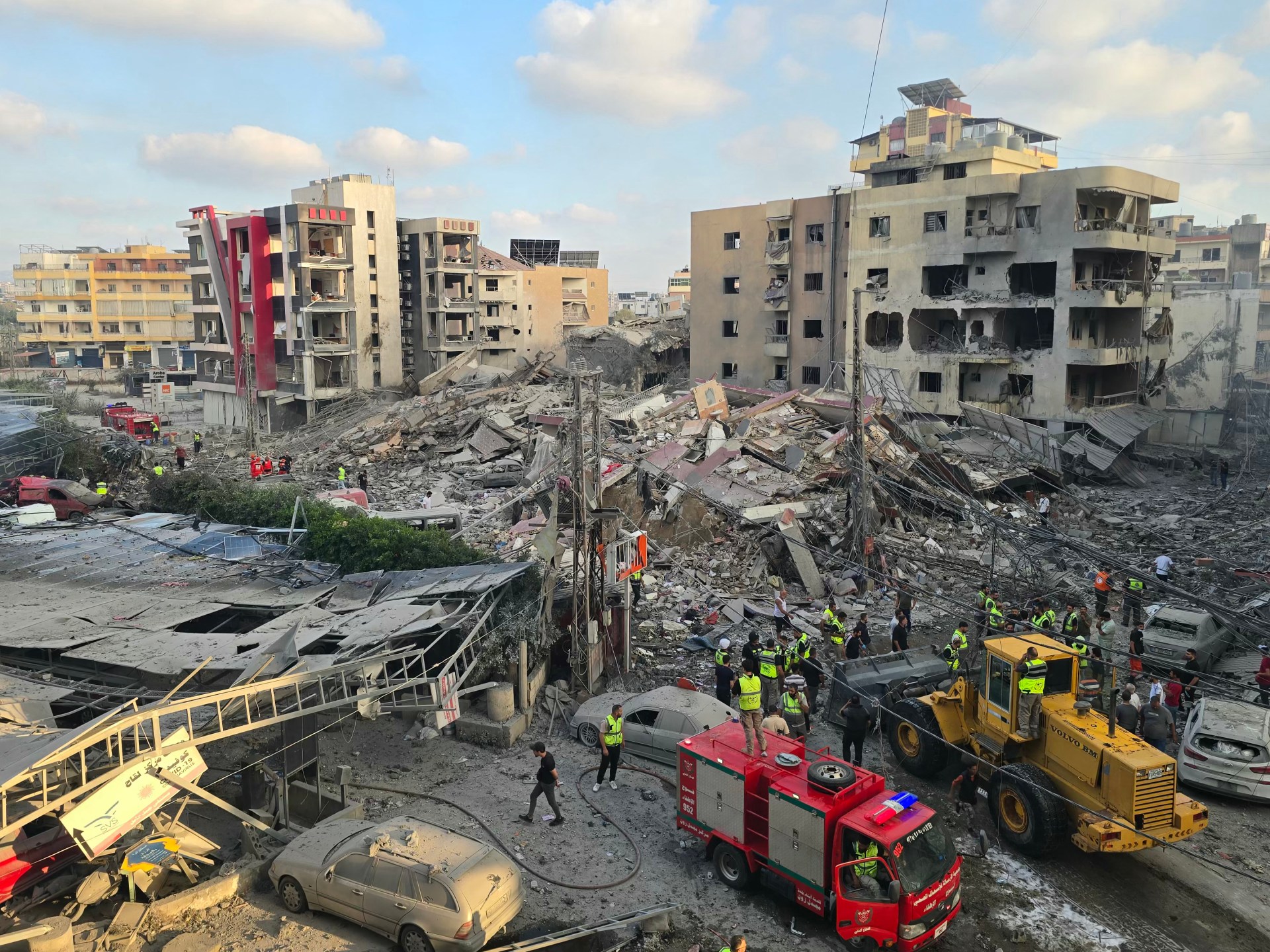
Since early March, Israel has continued to launch near-daily attacks on Lebanon and currently occupies about one-fifth of the country.
According to the Lebanese Ministry of Public Health, more than 3,412 people have been killed and 10,269 wounded in Israeli attacks on the country since March 2.
The escalation has displaced more than one million people in Lebanon and raised fears that Israel could launch deeper operations towards Beirut.
On Sunday, Iranian state media reported that Tehran was suspending message exchanges with Washington in protest.
Following Trump’s announcement on Monday, Lebanon’s UN Ambassador Ahmad Arafa commended the Trump administration for “constructive efforts aimed at giving diplomacy a chance”.
The announcement is also significant because previous ceasefire attempts between Israel and Lebanon have repeatedly collapsed. A 10-day truce announced on April 22, and later extended by three weeks, failed to produce a halt in fighting.

How have Hezbollah, Israel responded to Trump’s announcement?
On Monday, Netanyahu’s office said Israel would reserve the right to strike Beirut if Hezbollah attacks continue.
“If Hezbollah does not cease attacking our cities and citizens … Israel will attack terror targets in Beirut,” he said.
On Monday, Israel’s military issued new forced displacement orders, warning residents of the southern suburbs to flee to “preserve their safety”, reiterating that if Hezbollah continues to target Israel with rockets, Israeli forces would attack Beirut’s Dahiyeh area.
On Tuesday morning, there had been no reports of Israeli attacks on the Lebanese capital. However, Israel has continued attacks on southern Lebanon, firing artillery near Nabatieh and hitting the villages of Choukine and Kfar Tibnit, Al Jazeera reported.
Meanwhile, Lebanon’s embassy in Washington released a detailed statement saying Hezbollah had accepted a US proposal for a “mutual cessation of attacks”.
“Under the proposed arrangement, Israeli strikes on Beirut’s southern suburbs would cease in exchange for Hezbollah refraining from carrying out attacks against Israel, with the ceasefire framework to be expanded to encompass all Lebanese territories,” the statement said.
Prominent Hezbollah MP Hassan Fadlallah says the group supports a “full ceasefire on all Lebanese territory”.
The ceasefire would be a precursor to the withdrawal of Israeli troops from Lebanon, Fadlallah told the al-Manar broadcaster.
Advertisement
Lebanese parliamentary speaker Nabih Berri, a prominent ally of Hezbollah, said in a statement that he could vouch for the armed movement’s “full, comprehensive and immediate” adherence to a ceasefire. “The real issue is who will force Israel to halt its aggression?” he added.
According to Sami Nader, an analyst and director of the Levant Institute for Strategic Affairs, Israel’s attacks on Lebanon are a “very dangerous escalation” of the current conflict.
“What we are seeing is a systemic demolition of infrastructure. It’s going beyond this ‘Yellow Line’,” Nader told Al Jazeera. “The only solution to this is to decouple the Lebanon ceasefire from the Iranian one.
“Practically, everyone except Hezbollah wants the decoupling of the Lebanon ceasefire from the Iranian one,” he added, but warned that the Lebanese government needs international involvement to achieve a ceasefire.
Israel’s “Yellow Line” is a military zone stretching roughly 10km (six miles) north of the border inside southern Lebanon.

“This is unprecedented, if he really spoke to Hezbollah and not one of its allies,” said Al Jazeera’s Ali Hashem, reporting from Beirut, Lebanon.
“This could be a breakthrough in Hezbollah-US relations since the 1980s,” he added.
Hezbollah (which means “Party of God” in Arabic) was formed in 1982 to fight Israel’s occupation of southern Lebanon that year.
Since the fighting in Lebanon restarted in early March, the US has taken a hardline approach towards Hezbollah. On April 24, Trump demanded that Iran stop funding Hezbollah as part of any broader regional settlement.
Secretary of State Marco Rubio has described Hezbollah as the main obstacle to peace between Israel and Lebanon, saying last month that “the problem with Israel and Lebanon is not Israel or Lebanon, it’s Hezbollah.”
Meanwhile, Hezbollah’s chief Naim Qassem previously dismissed direct, US-mediated talks with Israel, calling them “futile”. Senior Hezbollah MP Hassan Fadlallah has also denounced US-backed diplomacy between Lebanon and Israel as a “national sin” which would deepen divisions in the country.
Israeli and Lebanese officials held their first direct negotiations since 1983 on April 14 this year, and have met twice more since then.
Nevertheless, indirect communication between Washington and Hezbollah is not unprecedented, despite hostilities.
Over the years, US officials have often relied on Lebanese state figures – especially Parliament Speaker Berri – to act as intermediaries when trying to resolve regional crises.
In November 2024, the US relied on Berri to help secure a ceasefire agreement between Hezbollah and Israel amid Israel’s genocide in Gaza.

Related News

Political commentators Cenk, Piker say UK bars them over Israel remarks

Taiwan’s president says future will not be decided by ‘external forces’

Hottest year on record almost certain to occur by end of 2030, UN warns