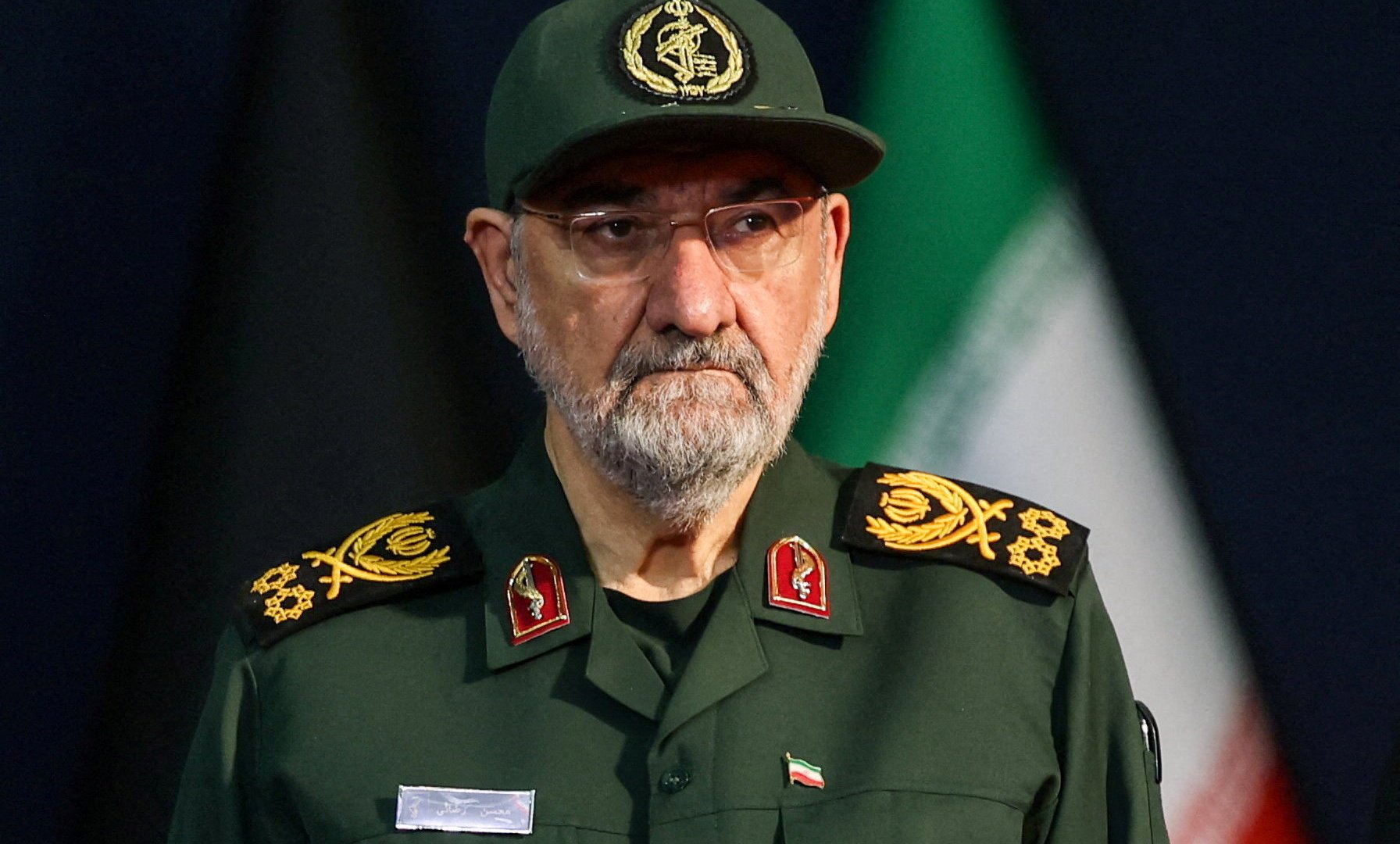

Mohsen Rezaei, the former commander-in-chief of the Islamic Revolutionary Guard Corps (IRGC), has been appointed as the head of Iran’s top security body, which plays a crucial role in the country’s security and foreign policy.
Rezaei takes over as secretary of the Supreme National Security Council amid ongoing talks over the Strait of Hormuz, which Tehran has used as leverage during the months-long conflict with the US and Israel.
He replaces Mohammad Bagher Zolghadr, who has been appointed as a political adviser to Supreme Leader Mojtaba Khamenei. The position was formerly held by Ali Larijani, who was assassinated in a US-Israeli strike in March.
Here is what we know about Rezaei and his appointment.
Who is Mohsen Rezaei?
Rezaei, 71, headed the IRGC from 1981 to 1997. That period included the Iran-Iraq War of the 1980s, referred to in Iran as the “Sacred Defence”.
Rezaei then went on to serve as a member of Iran’s Expediency Discernment Council, which resolves disputes over legislation between parliament and the Guardian Council.
The Guardian Council is a separate body appointed by the supreme leader that vets candidates for elected political office in parliament, presidency and the Assembly of Experts. It’s also tasked with reviewing legislation to ensure compatibility with the constitution and Islamic law.
Rezaei has placed high importance on Iran maintaining control of the Strait of Hormuz, a narrow waterway through which a fifth of global oil and gas pass. In July, he said control of the waterway was worth more than “dozens of atomic bombs”. Last week, he warned the US it would “face serious risks and casualties” if its blockade of Iranian ports continues.
Advertisement
Iran has imposed a blockade on the strait in response to the US-Israel war launched in February, while the US has hit Tehran with a naval blockade in efforts to put economic pressure on the country.
The Iranian president’s communications office announced on Sunday evening that President Masoud Pezeshkian had appointed Rezaei as secretary of the Supreme National Security Council, Al Jazeera Arabic reported.
On the same day, Khamenei issued a decree appointing Rezaei as his representative on the council, making special reference to his experience and to his being among the “pioneers of the Sacred Defence era” during the Iran-Iraq war – a reference that reinforced the presence of his military background in interpretations of the reasons for his selection.
The Supreme National Security Council is a key institution where the strategic considerations of the presidency, the foreign ministry, the armed forces and the security agencies intersect.
Therefore, the identity of the council’s secretary carries significance that goes beyond his administrative powers, especially when the change in leadership coincides with an open war, faltering negotiations with the United States, and disputes over the terms of navigation and sovereignty over the Strait of Hormuz.
Rezaei will bring military, economic and political experience to the role, Abas Aslani, a senior research fellow at the Tehran-based Center for Middle East Strategic Studies, told Al Jazeera.
“They needed to have someone who can somehow synchronise different bodies of the government,” Aslani said.
“Politically, he is not that much different from his predecessor on security, but the role he can play domestically, and being a balancing act in the country, is quite significant in this regard,” he added.
Aslani added that Rezaei, as a former IRGC chief and member of Iran’s Expediency Discernment Council, will also play an important role in Tehran’s negotiations with the US.
“I think it is important to have someone who is able to reach out to different factions and to talk to them, and that is why he has been picked,” he said.
Rezaei’s appointment takes on an additional political dimension given his position during the 2024 presidential election, when he backed Mohammad Bagher Ghalibaf, placing him electorally closer to the conservative wing represented by Ghalibaf, the current parliament speaker and chief negotiator in talks with the US, rather than to the more hardline faction associated with Saeed Jalili, who was the runner-up against Pezeshkian.
Advertisement
This positioning does not mean that Rezaei is a moderate figure, nor is a single electoral stance sufficient to judge his permanent alliances. But it shows that his position within the conservative camp does not necessarily coincide with that of Jalili and the forces most opposed to negotiations with the US.
This position could give Rezaei room to manoeuvre among multiple parties: Pezeshkian’s government, which adopts a discourse more open to negotiation; the conservative camp linked to Ghalibaf; and the military and security forces with which Rezaei has historical ties dating back to his period as commander of the IRGC.
What will be implications of Rezaei’s appointment to the top security post?
Analysts interviewed by Al Jazeera Arabic offered two main readings of the appointment. One sees it as a sign that military and security considerations are being prioritised amid war and tensions with the United States. Others argue that bringing a former IRGC chief into the heart of the decision‑making structure could, paradoxically, make it easier for the leadership to sell any eventual negotiated settlement to hardline audiences at home.
Iranian journalist and political analyst Mashallah Shamsolvaezin told Al Jazeera Arabic that Rezaei’s selection surprised a segment of Iranians who had expected new faces to enter the Supreme National Security Council to lead the institution during the war and respond to demands for renewal in the decision-making structure.
According to Shamsolvaezin, more hardline forces view Rezaei’s military record, especially his previous command of the IRGC, as a factor that gives decisions issued by the council stronger security and political guarantees.
This interpretation stems from the fact that the challenge facing Iranian decision-making is not only about making decisions, but also about their ability to win acceptance within centres of power and among the social base that supports the hardline current. The course of negotiations has been accompanied by chants demanding that they be stopped and accusing their supporters of weakness, making any settlement vulnerable to political one-upmanship if carried by a figure associated with the moderate current.
Shamsolvaezin added that Rezaei’s move to the council’s secretariat may reduce this debate, because his military history gives the decisions he helps make a greater ability to contain objections from more hardline factions.
He added that Rezaei’s presence at the head of the council could calm a broad segment of these forces, particularly concerning the negotiations, because they would find it very difficult to accuse a former IRGC commander of weakness or of squandering Iran’s security interests.
Externally, Rezaei’s appointment allows for two seemingly contradictory readings: the first is that it is an Iranian response to the tightening US pressure, and the second is that it is a prelude to making difficult decisions in the course of negotiations, Al Jazeera Arabic reported.
According to the first reading, Tehran wants to say that an escalation of sanctions, blockade and military pressure will be met with a similar hardened position, and that putting forward demands that go beyond previous understandings will prompt Iran to present figures who represent a more hardline front to manage the confrontation.
Advertisement
The second reading proceeds from the idea that major settlements do not necessarily pass through moderate figures, but may require someone who belongs to the very centre of power. When a figure with a military and security record adopts the option of negotiation, he becomes more able to defend it domestically and less vulnerable to accusations of making concessions.
Shamsolvaezin believes Rezaei can play a role in pushing political negotiations with the US forward, because his military history provides domestic cover and a major guarantee for implementing any future understanding.
According to this reading, the question is not whether Rezaei is hardline or moderate, but rather the ability of his military and political credentials to turn a decision, whatever its direction, into an actionable policy.
‘Shift in security doctrine’
But international relations Professor Mohsen Farkhani offers an analysis that leans more towards considering the appointment a reflection of a shift in Iranian security doctrine, rather than merely a search for domestic cover for negotiations.
Farkhani told Al Jazeera Arabic that Rezaei’s appointment came after what he described as repeated US violations of the June Memorandum of Understanding (MoU), and the failure of diplomacy to contain tension and war. Tehran has accused Washington of violating the terms of the MoU.
In his analysis, Rezaei’s experience – whether in commanding the IRGC or organising forces during the eight-year war – aligns with Iran’s shift towards the concept of “offensive deterrence based on punishment”, and readiness for a serious military confrontation and a long-term war of attrition.
Farkhani says the decision reveals that greater weight is being given to traditional warfare approaches, alongside continued reliance on asymmetric methods, to impose cumulative losses on hostile states during a high-pressure, long-term confrontation.
Based on this reading, Farkhani expects Tehran to adopt less flexible positions towards the US, whether in potential negotiations or in issues related to sovereignty over the Strait of Hormuz.
In his view, this does not mean that Rezaei alone will change the structure of decision-making or the legal weight of President Pezeshkian, the foreign ministry and the IRGC leadership, because the council operates within specific parameters and performs the function of coordinating between institutions under the supervision of the supreme leader and his final decisions.
But his appointment, according to Farkhani, will lend greater weight to the military and security considerations in decision-making and its implementation, while making assessments of deterrence and war more prominent when political and negotiating options are being considered.
Ultimately, Farkhani sees Rezaei’s appointment as an indication that military and security considerations are being given priority and that Iran’s position is hardening, while Shamsolvaezin argues that the former IRGC commander’s hardline background may, on the contrary, give him the ability to provide internal cover for any potential negotiated settlement.
Related News
US House votes to limit Iran war for first time since ceasefire breakdown
Mykhailo Drapatyi: Can new Ukraine army chief alter Russia war’s direction?
Houthis renew missile and drone attacks on Yemen’s port of al-Makha